
Argentina is home to many epic train journeys, but perhaps none is more famous than the Old Patagonian Express!
This heritage train is locally known as La Trochita, meaning ‘little gauge’ because it’s a narrow gauge railway that’s only 750 mm wide or about 2 feet 5 and a half inches.
The journey showcases the ruggedness of Patagonia with epic views of mountains, valleys, and steppe. It truly is one of the highlights of a visit to Chubut!
I had been dreaming of travelling aboard this train ever since I read The Old Patagonian Express by Paul Theroux many years ago, and I specifically included Esquel in our northern Patagonia travel itinerary, so that we could make this train ride happen.
Today, La Trochita may only operate a short portion of the original 402-kilometre route it once covered, however, it captures the nostalgia of 20th-century train travel, and I’m all about that.
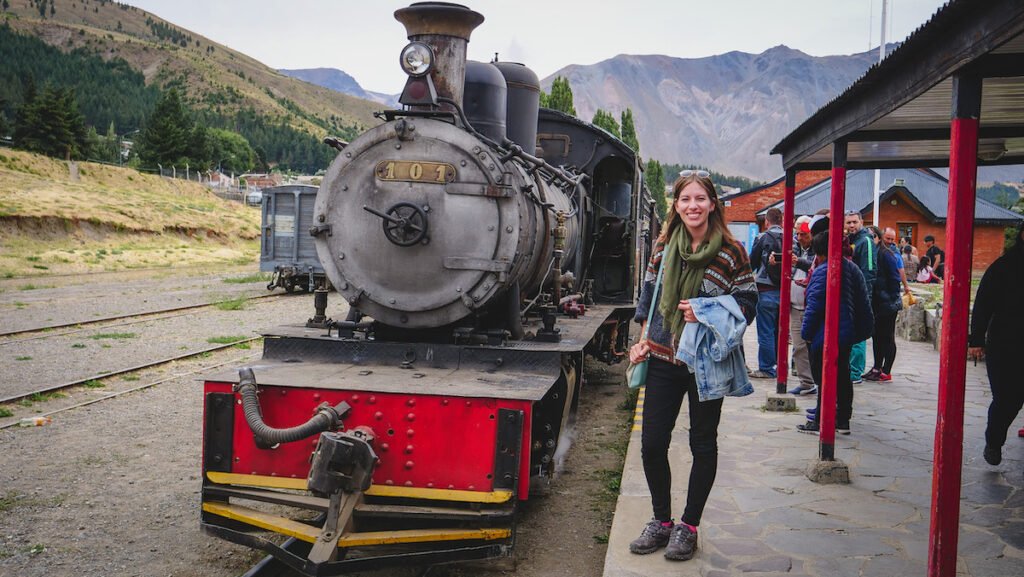
History of the Old Patagonian Express
The Old Patagonian Express once stretched out 402 kilometres, and it was originally planned as part of a larger network that would connect all of Patagonia. However, the project was never completed due to ministerial changes and then the start of the First World War, which also affected Argentina’s economy.
Its use eventually began to decline as road systems improved, and because part of the railway network was never completed, it left this line isolated and disconnected from the rest of the country.
But then things changed when Paul Theroux published his book The Old Patagonian Express in 1978.
In his book, Theroux set out to travel by train from his hometown in Massachusetts all the way down to Argentina, and clearly the Patagonia leg of his journey made quite the impression because it earned the book’s title!
Travellers suddenly began to take an interest in the Old Patagonian Express, and that brings us to the train journey as we know it today.
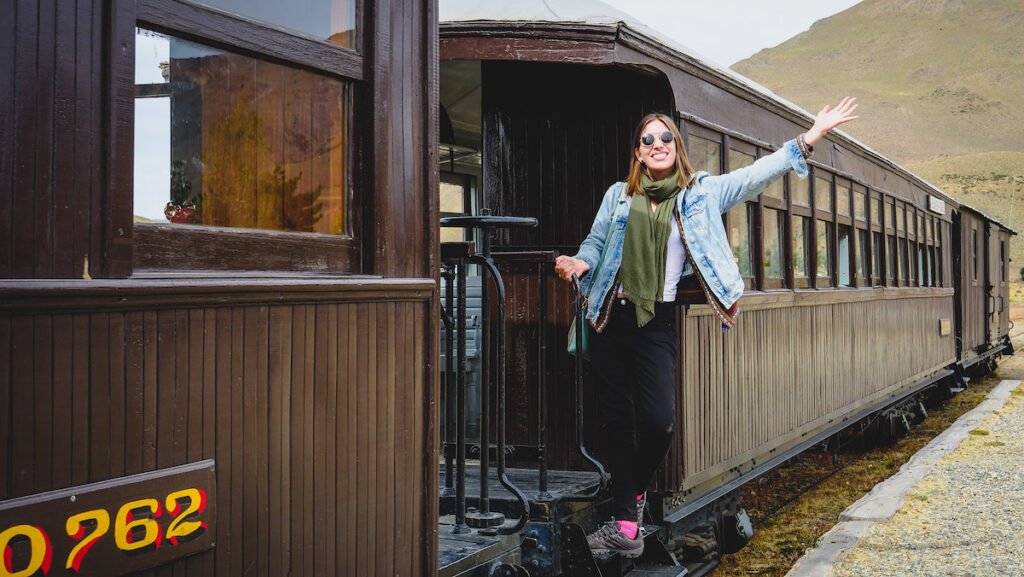
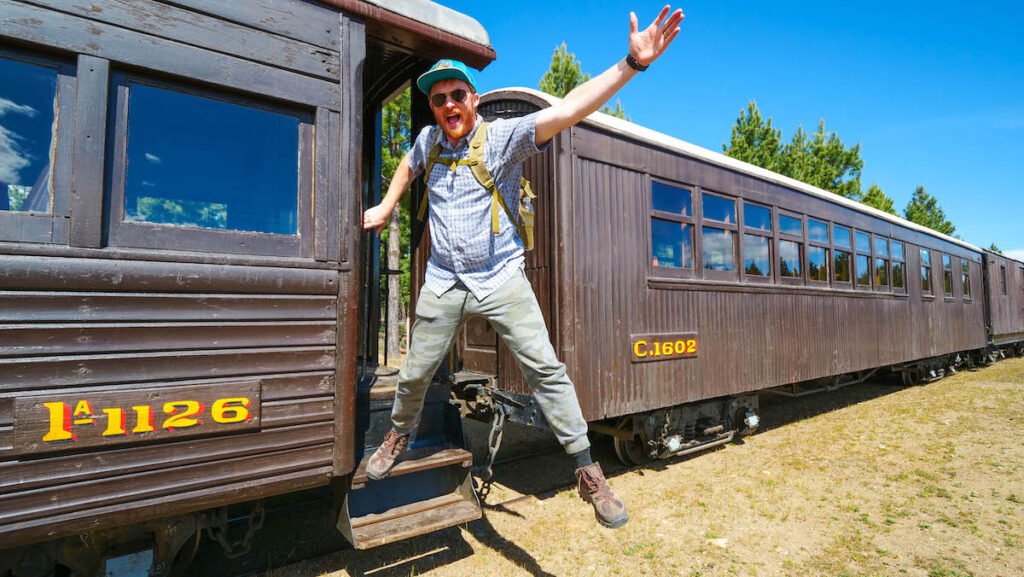
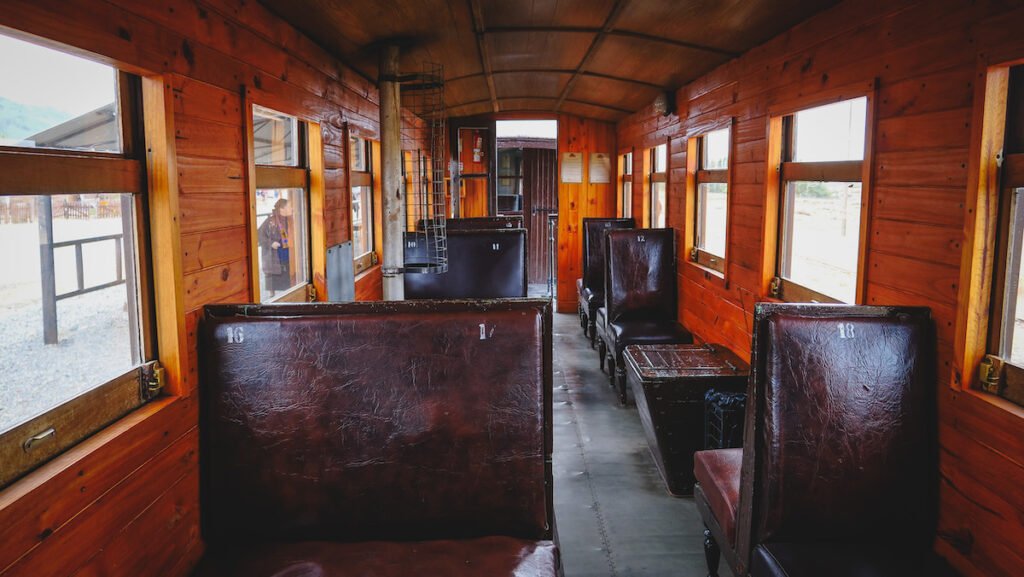
Today, the train operates on alternating locomotives; one is a Baldwin from the United States and the other a Henschel from Germany. The wooden wagons came from Belgium, and the heaters were installed in Argentina to make the journeys across Patagonia in winter a little more bearable.
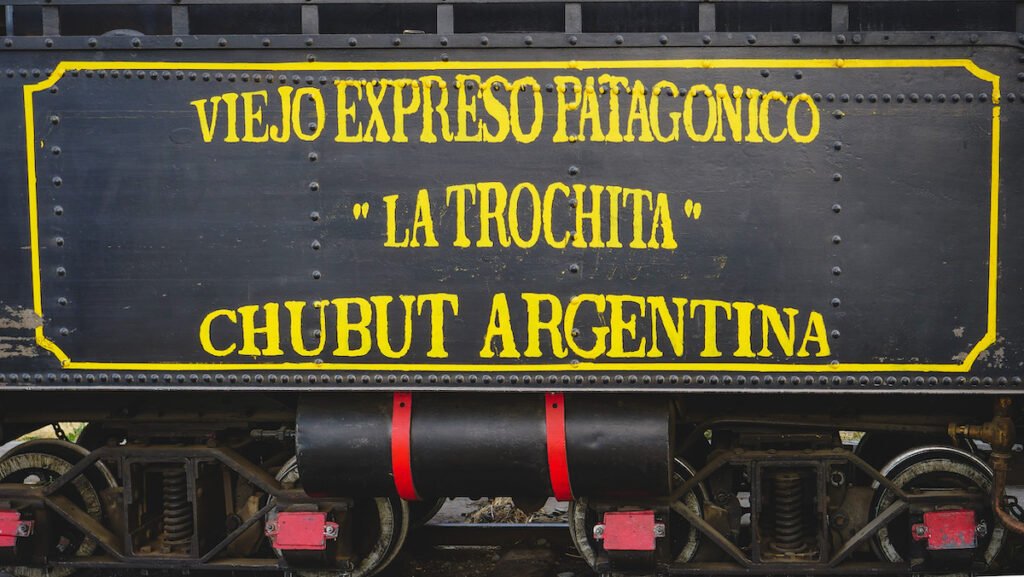
How to ride the Old Patagonian Express train
There are three segments of the Old Patagonian Express for travellers to choose from, and I’m proud to say that I have now travelled aboard all three!
Some of these segments operate with more frequency than others, and not all run year-round, so before you plan your train journey, it’s best to check an updated schedule on the official La Trochita website.
The three train segments are:
- Esquel to Nahuel Pan – 18 kilometres
- El Maitén to Desvío Bruno Thomaé – 26 kilometres
- Ingeniero Jacobacci to Ojos de Agua – 42 kilometres
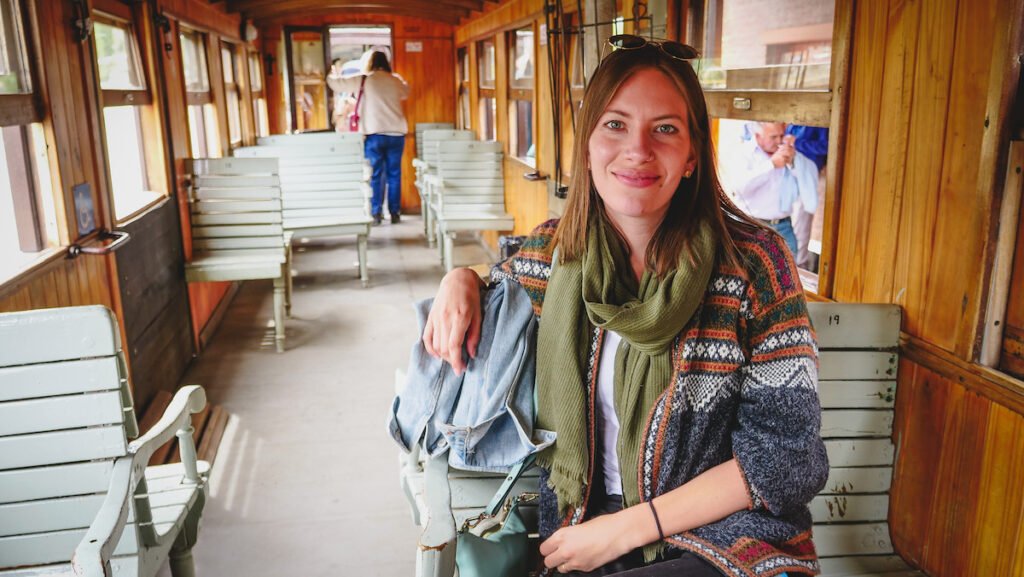
Esquel to Nahuel Pan
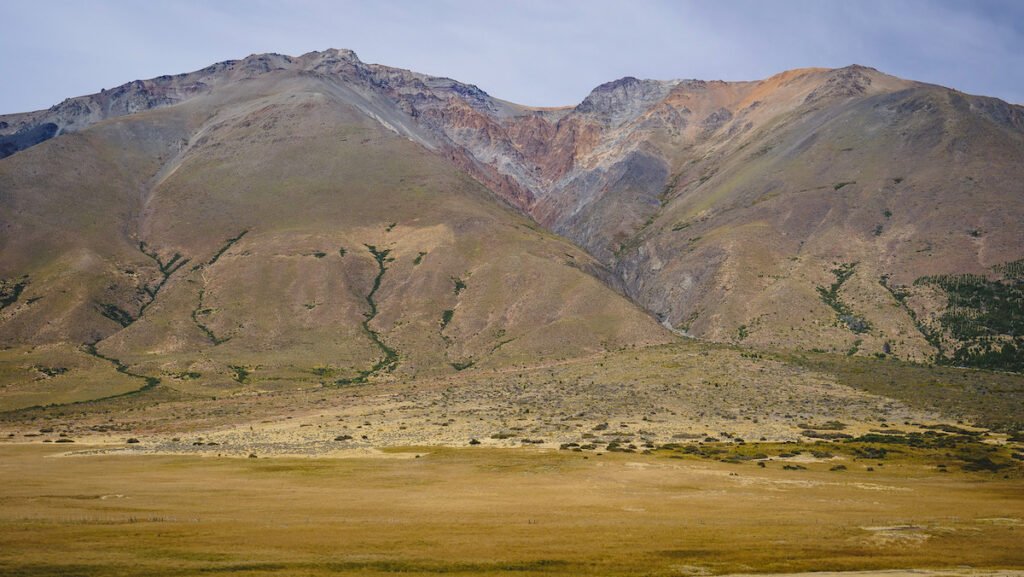
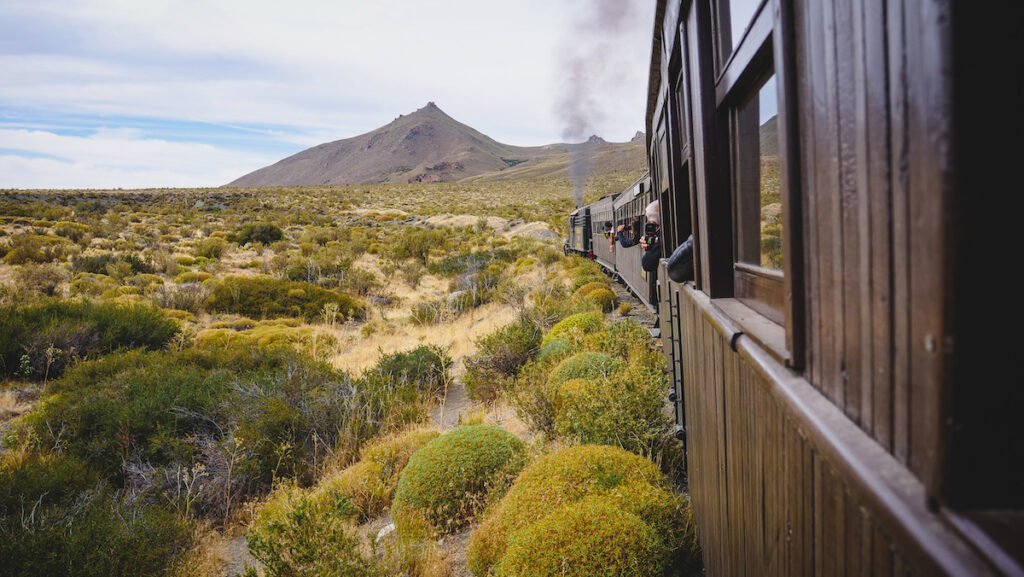
The most popular route runs from Esquel to Nahuel Pan and it’s a beautiful journey. This one is my absolute favourite of the three for the views!
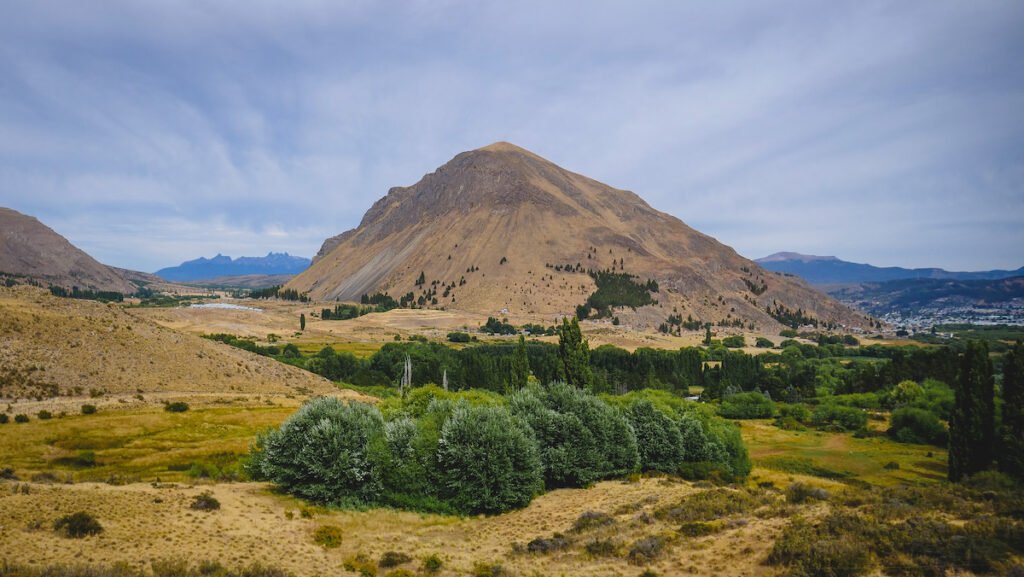
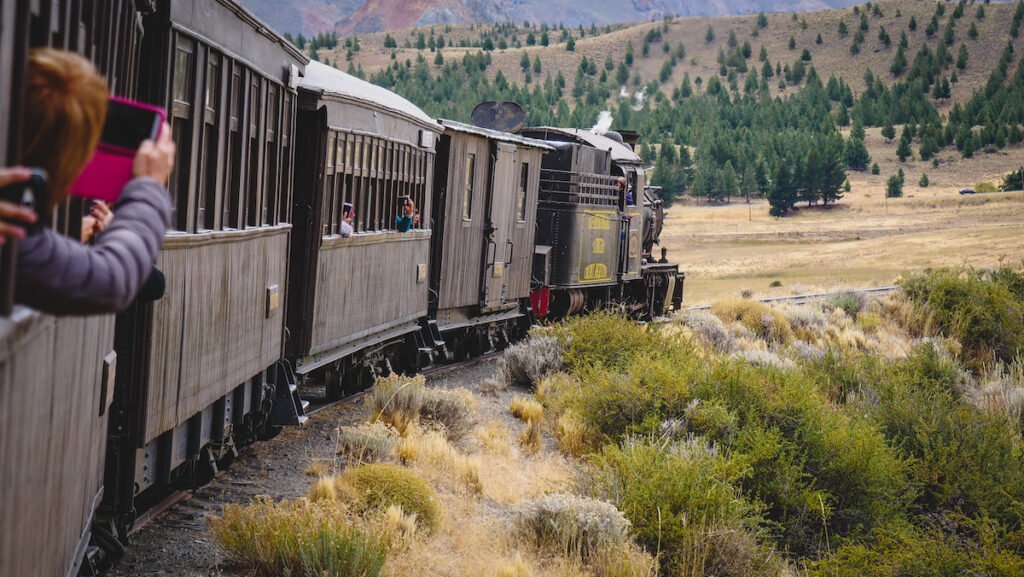
As you leave the town of Esquel, you begin the ascent out of the valley where you are treated to mountain views and sheep grazing in the Patagonian steppe. I love that you can stare off into the horizon and just admire the Andes. Also, the colours of the mountains are pretty spectacular with varying shades of purple, burgundy and ochre due to minerals.
You’ll notice this is the shortest of the three segments in terms of distance covered, however, this train journey involves an ascent out of town, so it travels a bit slower as you chug uphill.
It is a 1-hour journey from Esquel to Nahuel Pan. The trip goes by quickly; I would’ve happily sat in the train for twice as long had there been more rails to travel.
Once we arrived in Nahuel Pan, we had 45 minutes to explore at our own leisure.

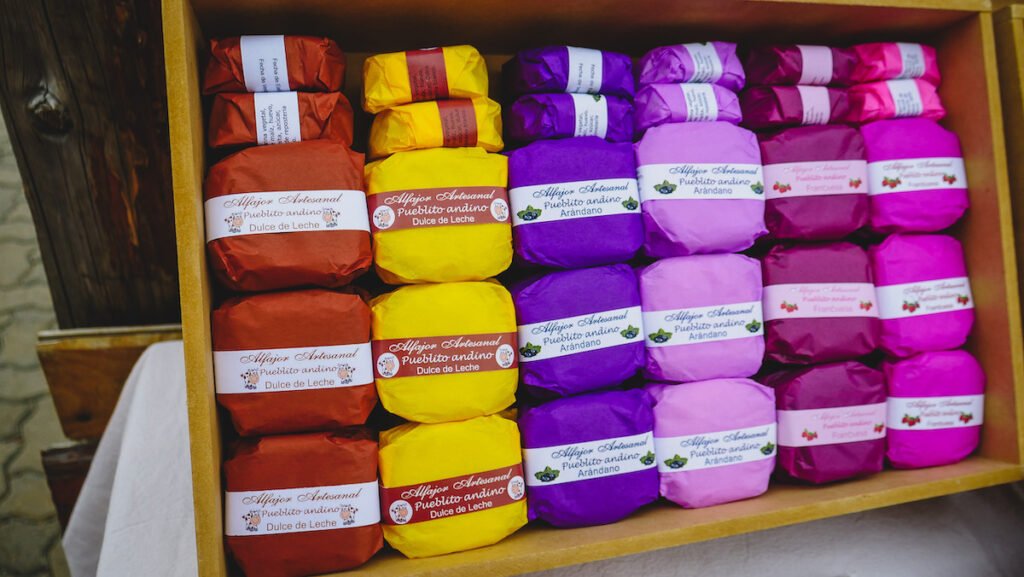
We first made a beeline for the artisanal fair. Vendors had set up booths showcasing all sorts of handmade souvenirs, and we were immediately drawn to the alfajores with fillings like dulce de leche, raspberry, Welsh-inspired Bara brith, and rum and raisin. Yes, we bought a few and proceeded to devour them.
There was also a man cooking chorizos on the grill, so we got some choripán (chorizo on a bread bun) with chimichurri and had a quick lunch. If you want to eat, it’s worth lining up for the choripan right away, as it’s a popular stop and the guy couldn’t keep up with the demand fast enough.
Lastly, we visited the Museum of Patagonian Culture, which focuses on the indigenous peoples of Patagonia. It’s a very small museum with only two rooms, but we looked at the displays that showcase ceramics, musical instruments and textiles from the region. If you speak Spanish, you can also ask questions to the museum guide on site.
On the journey back, there was live music on the train. A local musician made his way through the carriages singing and playing songs on his guitar as we travelled back to Esquel. The mood was very lively and it was nice to have some entertainment as we travelled back to Esquel.
El Maitén to Desvío Bruno Thomaé
On a follow-up trip to Patagonia, we travelled another segment of the Old Patagonian Express train, this time from El Maitén to Desvío Bruno Thomaé.
This is a 26-kilometre journey across the Patagonian steppe. The journey is relatively flat; we got some mountain views on the horizon and also travelled through sections of planted pine forest.
Now, if I compare this journey with the one from Esquel to Nahuel Pan, the major difference is that when you arrive in Desvío Bruno Thomaé, there’s nothing to see or do. There is no artisanal market with food stands and souvenirs, only the ruins of an old train station that was burned down by a Mapuche protest. So we just stood around and waited while the train repositioned for the return journey.
I will say it’s worth arriving early in El Maitén in order to visit the Railway Museum and tour the Locomotive Repair Shop. This is a guided visit that’s included in the ticket price, and it’s a great opportunity to ask questions about this historic train (albeit in Spanish).
We heard stories about the extreme weather in Patagonia and how, when the train is scheduled to do its weekly outing in winter, sometimes they have to get it running 2 days ahead of time!
We also learned that when a working component of the Old Patagonian Express breaks down, workers have to handcraft a new part since the train is so old that spare parts are no longer produced industrially. The fact that this train is still running is a true testament to the ingenuity of the workers!
Ingeniero Jacobacci to Ojos de Agua
The third and final leg of the Old Patagonian Express train runs from Ingeniero Jacobacci to Ojos de Agua. This is the least frequent and least known of the three train segments you can travel aboard the Old Patagonian Express.
In fact, this route was closed for a long time and only recently reopened. Getting there involves either driving in from Bariloche (a 3-hour drive) or joining a guided tour departing from Bariloche to Ingeniero Jacobacci.
It is then a 2-hour train journey from Ingeniero Jacobacci to Ojos de Agua.
Upon arrival, you have about 1 hour and 15 minutes to enjoy a meal and walk around. The train then returns to Ingeniero Jacobacci via the same route.
NOTE: I’m updating this in 2026 to note that the route from Ingeniero Jacobacci to Ojos de Agua is not available at this time.
How to book train tickets
How do you book tickets for the Old Patagonian Express?
Here are a few different options:
Booking in person
If you’re already planning to be in one of the towns the train departs from (Esquel, El Maitén or Ingeniero Jacobacci), the easiest option is to go to the train station and buy them in person. However, be mindful of each train station’s hours of operation, which are limited.
If you’re visiting during low season, you may be able to get a ticket on the same day, but this isn’t advised during high season when every last seat on the train can be sold out.
For the Esquel train journey, we booked our tickets in person a day before since we were already in town.
Booking through a tour operator
If you want to avoid the hassle of going to the train station and booking in person, the best thing to do is to book through a local tour operator.
If doesn’t matter if you’re in Bariloche or El Bolsón, you can walk into almost any tour operator and book this excursion through them. This will often also include transportation to and from the departure station. That’s what we did when we travelled the El Maitén leg of the train journey.
So hit the streets and walk into some offices. Just try to do so earlier in your trip since the train departures are not daily, especially outside of high season.
Booking online
If you prefer to book online, you can do so directly on the official La Trochita website by clicking ‘Comprar pasajes’. You’ll then have the option to select your journey, date and departure time. You’ll then be presented with a list of fares and will want to click ‘Internacional’ if you’re an international tourist. Next, you’ll select your seats and choose your payment method.
You can also buy tickets online at Tren Patagónico Official Website by scrolling down to La Trochita. But be very careful that you don’t book the Tren Patagónico, which is an overnight train journey that crosses the country from the Andes to the Atlantic Ocean!
This isn’t the easiest website to navigate, so I’d only recommend it if you can read Spanish and understand the steps outlined on how to book the correct segment of the journey.
In our experience, this website can sometimes be glitchy, which is why we recommend booking in person or via a tour operator.
And that’s how you book a trip aboard the Old Patagonian Express train!
The journey may be a fraction of what it once was, but it’s an adventure nevertheless and worth adding to your list of places to visit in Patagonia, Argentina.
Even though this steam train covers a short distance, it’s a fun way to experience the magical landscapes of the Patagonian steppe.
We loved the experience and it has been fun getting to travel the different segments over the years.
GROUP TOURS – If you’d rather join a group tour to travel in Argentina, check out Gadventures.
CAR RENTAL – To explore Argentina beyond the cities, the best way to do so is by renting a car. Discover Cars offers rentals across the country.
BUS TICKETS – Bus travel is a great way to see Argentina. BusBud offers numerous routes.
TRAVEL INSURANCE – Don’t leave on your trip without booking travel insurance. You can get a quote on SafetyWing.
HOTELS – Booking.com offers accommodations to suit all budgets and travel styles.
TOURS – For a variety of tours and activities, have a look at Viator.