
El Zanjón de Granados and Casa Mínima are two attractions that have been on my Buenos Aires wish list for a long time. Exploring tunnels beneath an old San Telmo mansion sounded like exactly my kind of sightseeing, as did getting a peek inside the narrowest house in the city.
Well, I am happy to say that Samuel and I finally managed to tour both of these places during our most recent visit to Buenos Aires, and we did so with our baby in tow!
We enjoyed both guided tours, though I’d choose El Zanjón if I could only do one. Here’s what we saw, how we bought our tickets and what I’d want to know before arranging a visit today, especially if you’re travelling with a young child.
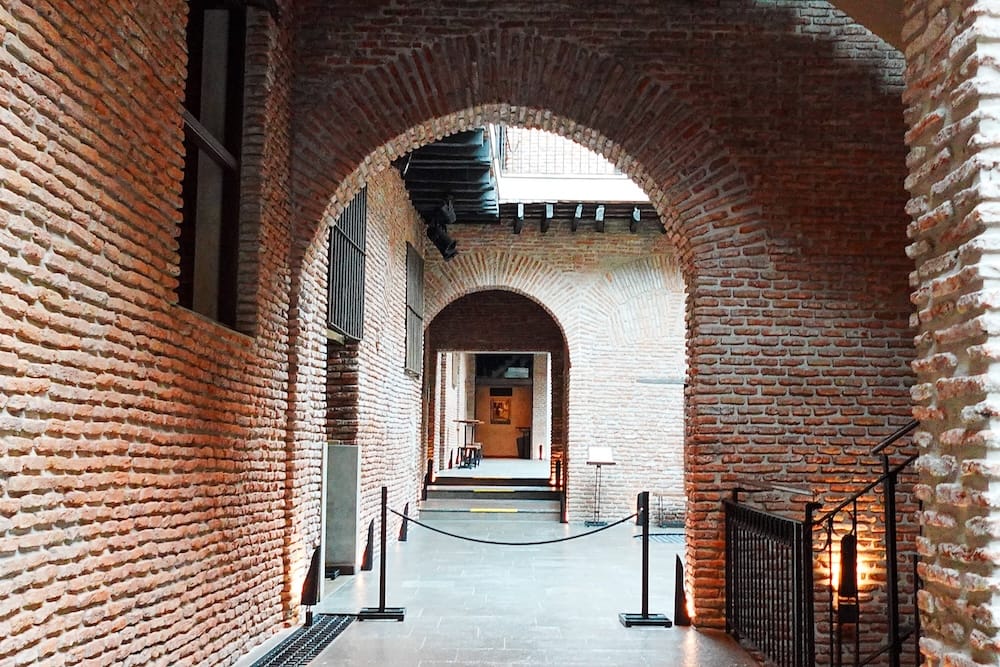
Can you visit El Zanjón and Casa Mínima on the same day?
Yes, and that’s how we visited them. El Zanjón de Granados is at Defensa 755, and Casa Mínima is around the corner at San Lorenzo 380, in Buenos Aires’s San Telmo neighbourhood. They’re neighbouring properties within the same restored historic complex, so you can walk between the entrances and it’s just 1 minute on foot.
I had already bought our tickets for El Zanjón online, but we still arrived 15 minutes early to check in. And when I learned that there would be a tour departing for Casa Mínima right after, I purchased that ticket on the spot.
Our El Zanjón tour lasted about an hour, followed by roughly 45 minutes at Casa Mínima. These two tours proved to be the perfect way to spend a rainy afternoon in Buenos Aires, so that’s something to consider if you’ve got some bad weather coming on the forecast.
Book your tour of El Zanjón de Granados here. Go underground, walk the hidden tunnels, and discover the colonial remains beneath San Telmo.
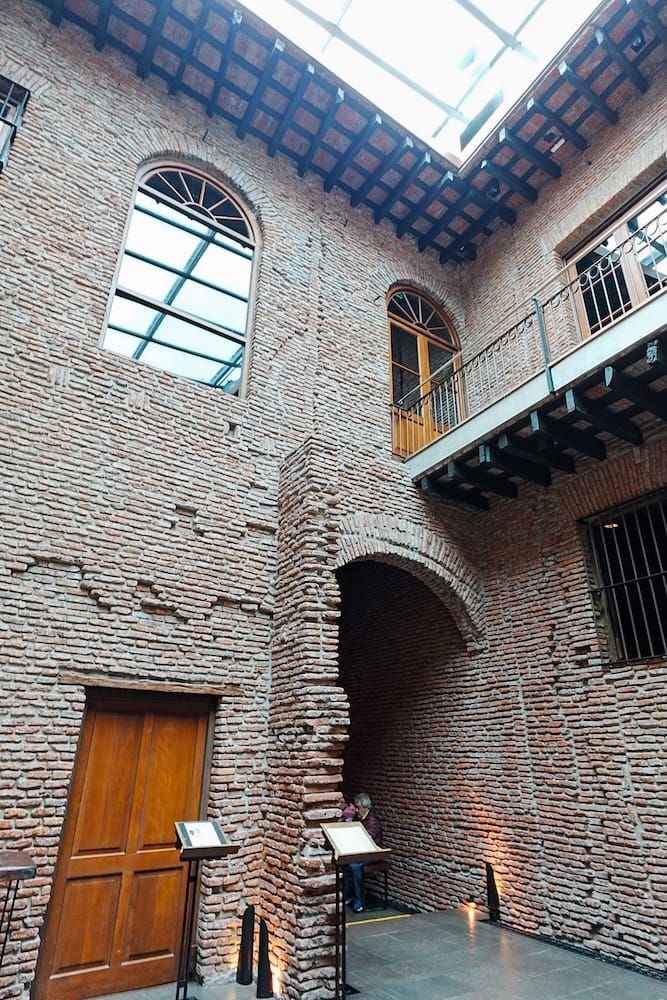
Tickets, tours and practical planning
Which ticket should you buy?
Since our visit, the operator has started offering a few different tour options. You can still book two separate standard guided tours, like we did. Or if you’re short on time, they have a condensed Flash Tour that visits both properties in just one hour. I’d say this option is more for people who are interested in the photo op and less interested in going into the deep history.
They also have a 1-hour Mate experience at Casa Mínima where you learn to make mate and then drink it with facturas (a classic Argentine merienda!).
Alternatively, there’s a 90-minute Premium tour at El Zanjón that includes traditional empanadas and Malbec wine. So plenty of options!
Have a look at the official tour page to choose between all four.
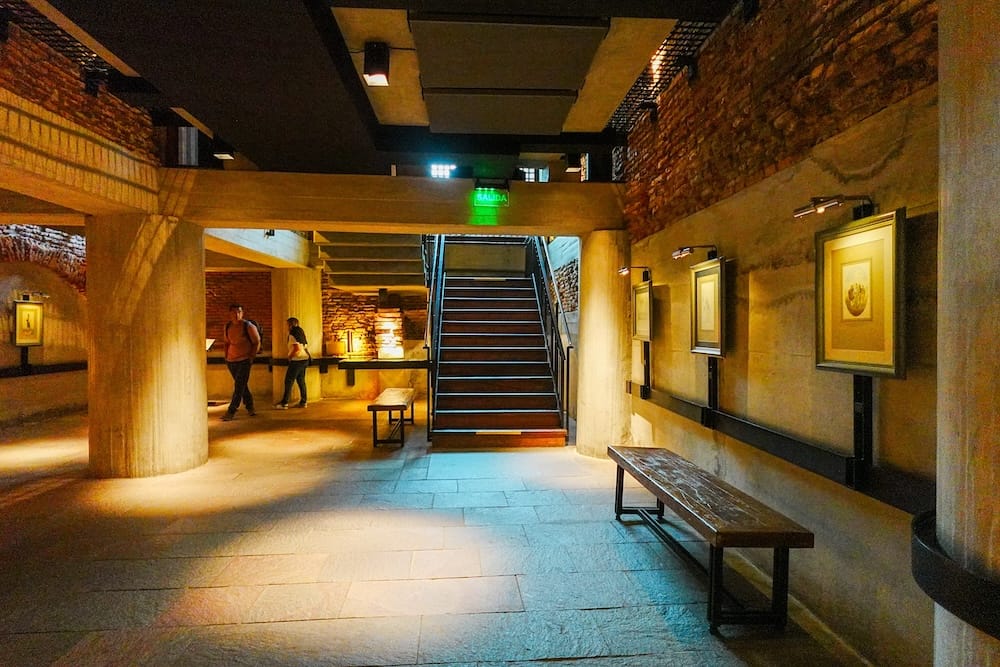
El Zanjón de Granados Tour
The history of El Zanjón de Granados
Now let’s set the scene with a bit of history, because El Zanjón isn’t your typical historic house where you walk through a few restored rooms and move on. Its history goes back to the earliest days of Buenos Aires, when natural streams carried rainwater through what is now San Telmo towards the Río de la Plata.
In 1779, Marcos Miguens, a landowner who had arrived from Galicia, Spain, purchased the property, which at the time contained a small house. His son-in-law, Andrés Cajaraville, later built a drainage channel to help control the flooding that affected this part of the city. These early structures are part of the underground history we see today.
During the 1830s, an impressive mansion was built on the property. By 1860, the residence was occupied by Vicente Moujan and Juliana Cajaraville, descendants of the earlier property owners, and it remained in the family’s ownership until 1910.
Then came a turning point for San Telmo. During the yellow fever epidemic of the nineteenth century, many wealthy families abandoned the southern neighbourhoods of Buenos Aires and moved north, leaving behind these once-grand residences.
El Zanjón’s mansion eventually followed the wider neighbourhood’s transformation, becoming a conventillo, or tenement house, during the 1880s. During this period, the once elegant family residence was divided into 23 bedrooms with just two bathrooms, accommodating a very different way of life as waves of immigrants arrived to the city.
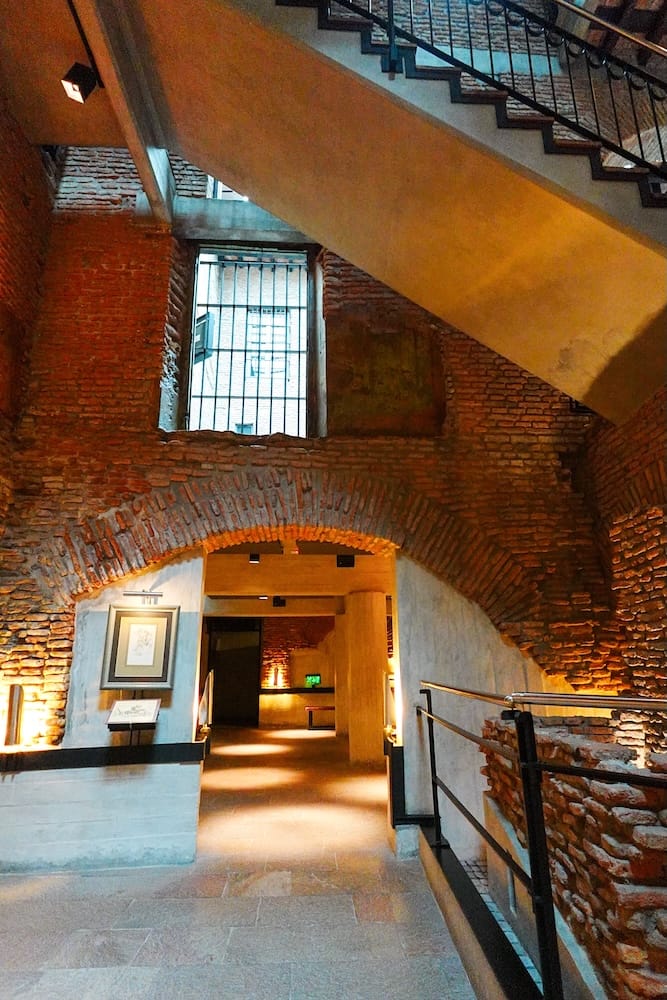
By 1892, Buenos Aires was installing its modern sewage system, and the old underground channels at El Zanjón were filled in and gradually forgotten. The mansion continued to deteriorate before being abandoned in the 1970s, eventually becoming a dumping ground for garbage.
That was the condition of the property when Jorge Eckstein entered the picture in the 1980s.
How Jorge Eckstein restored El Zanjón
Much of what we can explore today exists because of Jorge Eckstein, a chemical engineer who grew up in San Telmo.
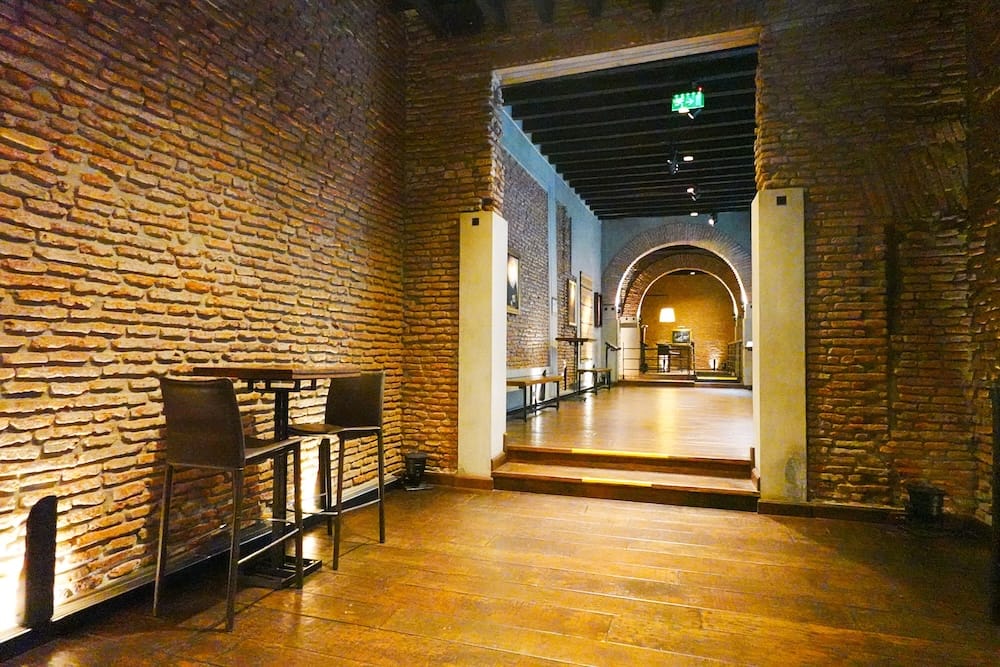
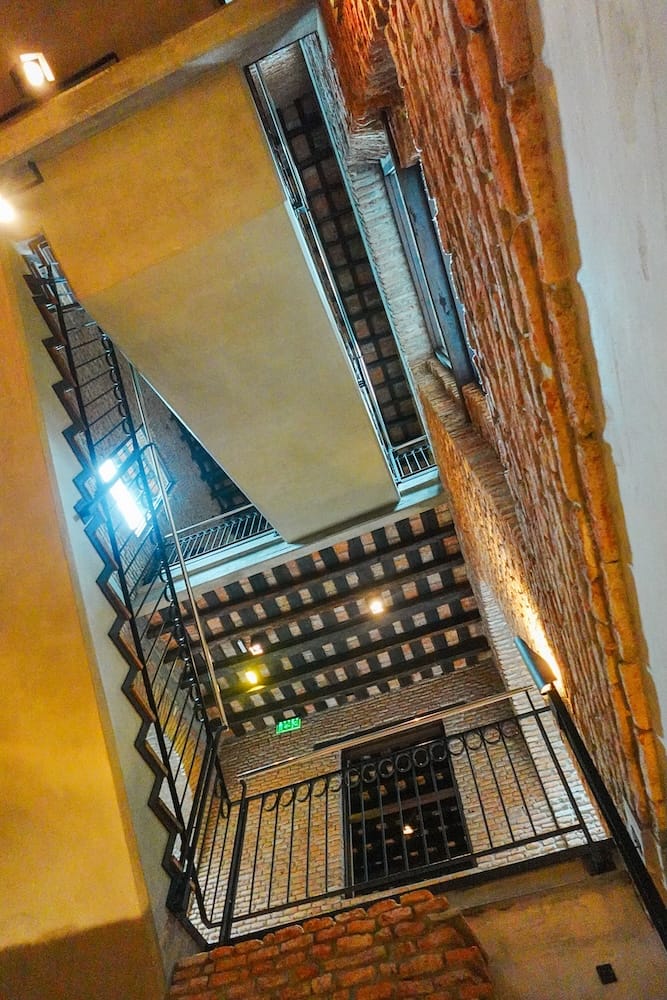
In the mid-1980s, he bought the abandoned mansion without ever having stepped inside; its entrances had been sealed, and the building was crumbling.
It originally wasn’t even a museum project. He planned to turn it into a restaurant, however, once work began and the old underground passages were discovered, the project took on a completely new life.
And what’s just as impressive is that Eckstein funded this entire restoration by himself! This entire project, including all the archaeological work and historical research, was done with zero state funding.
El Zanjón de Granados opened to the public in 2001, while Casa Mínima followed in 2003. And once all was said and done, around 12,000 artifacts were recovered – some of which we got to see on display during our visit!
Our experience touring the tunnels
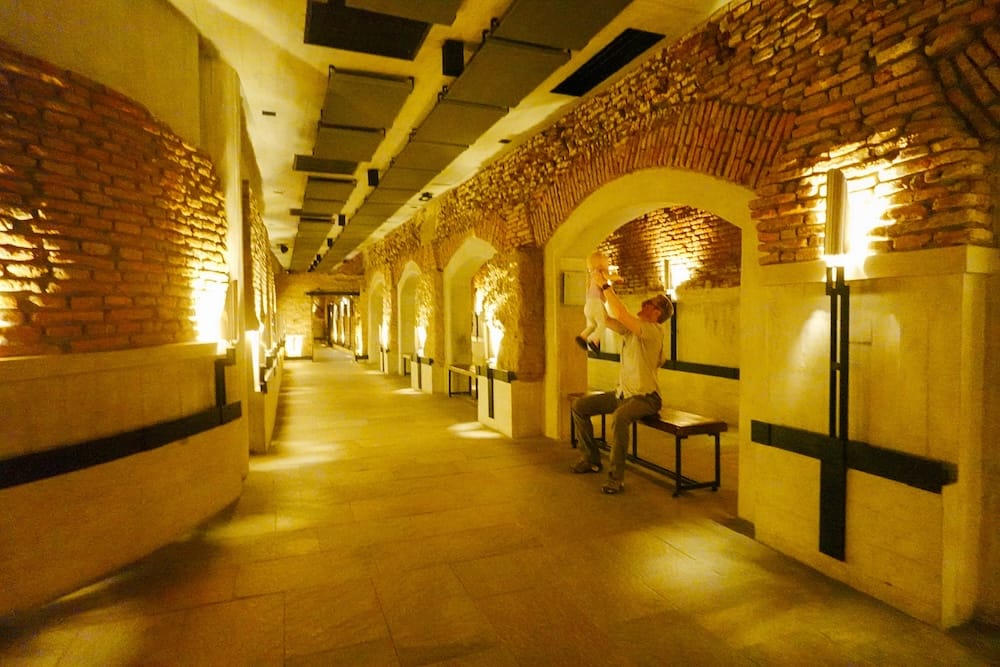
Our guide really brought El Zanjón to life for us, sharing stories of what life would have been like here, and its decay from family mansion to crowded housing and later ruin.
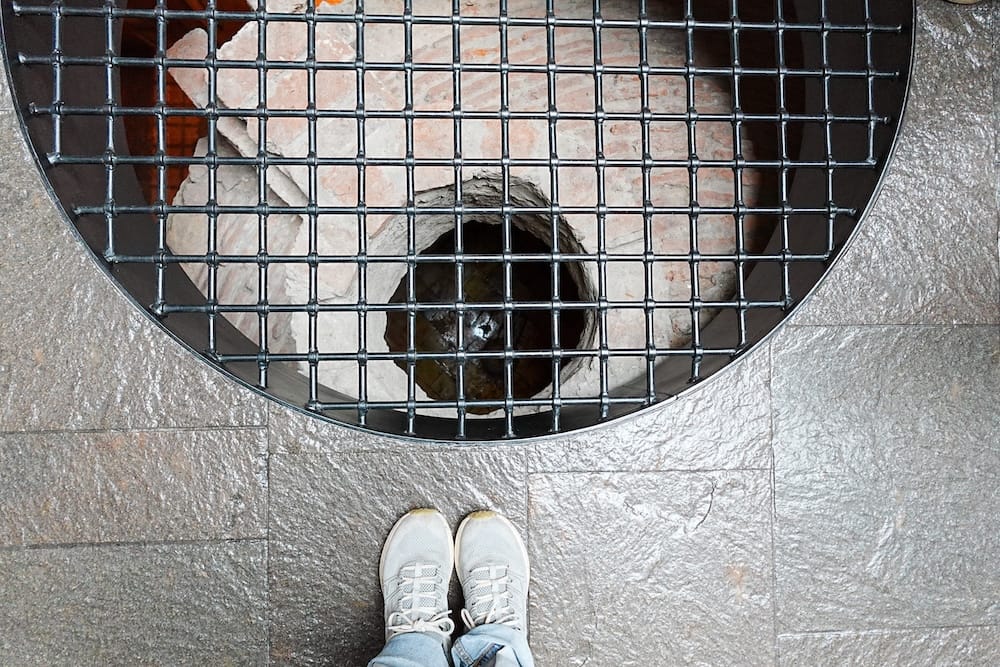
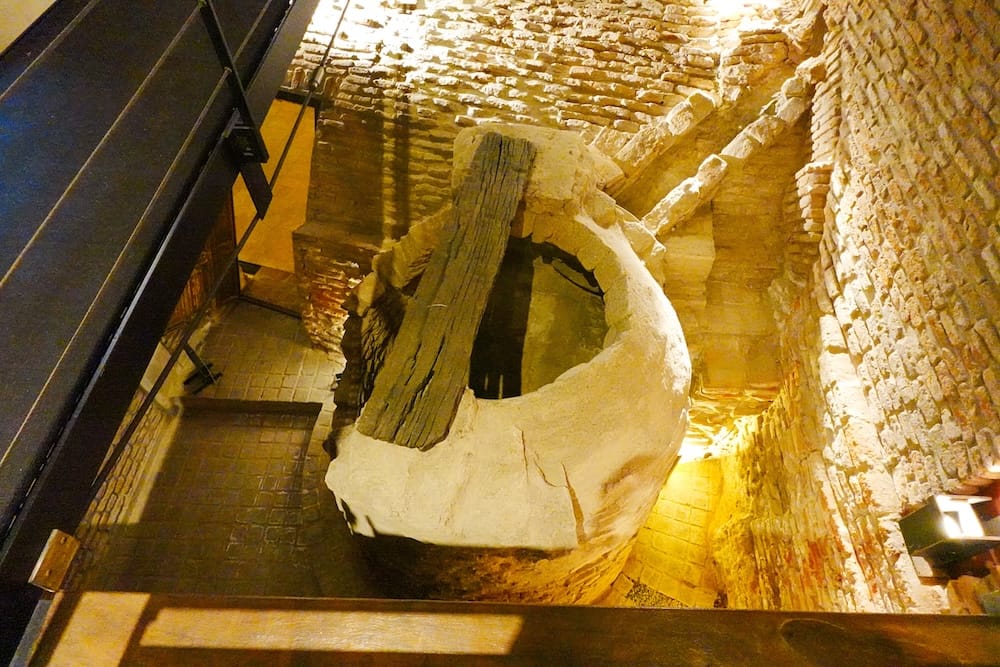
What stuck with me the most were the little details. For example, when we reached the old well and looked down, she told us that the family used to keep sea turtles to oxygenate and purify the water that they used for cooking and bathing! That was the norm back then. Which made most of us visitors think, but what about the turtle poop?
Then we ventured deeper into the maze and walked down a sloping underground passage, where the former stream once flowed. We could feel a noticeable drop in the temperature, the air felt cool, and we could see moisture and thin trickles of water running along our path.
This is the part of the tunnel where we were asked to refrain from taking photos, which we respected. We also learned this is where some workers claim to have had encounters from the other side…
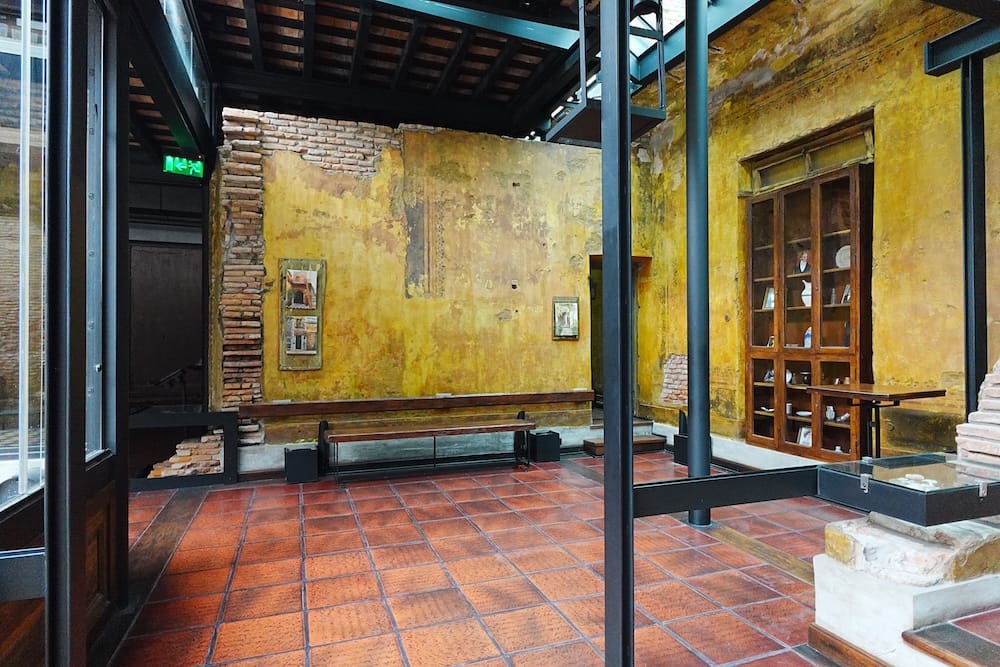
And then we reached a section where they had set up displays with objects that were found during the excavation. These were everyday objects that spanned four centuries, including cutlery, dishware, bottles, tin cans, and even boleadora stones from pre-colonial times.
All this to say that visiting El Zanjón kind of felt like time travel. Above us were the familiar streets of Buenos Aires, and down below we were transported to a very different version of the city.
I loved seeing what had survived beneath the streets. It made the underground tunnels feel less like abstract history, and it brought things to life in a tangible way. That was easily the highlight for me, and it’s why I would recommend El Zanjón to anyone interested in Buenos Aires history and architecture.
Casa Mínima Tour
Going inside the city’s narrowest house
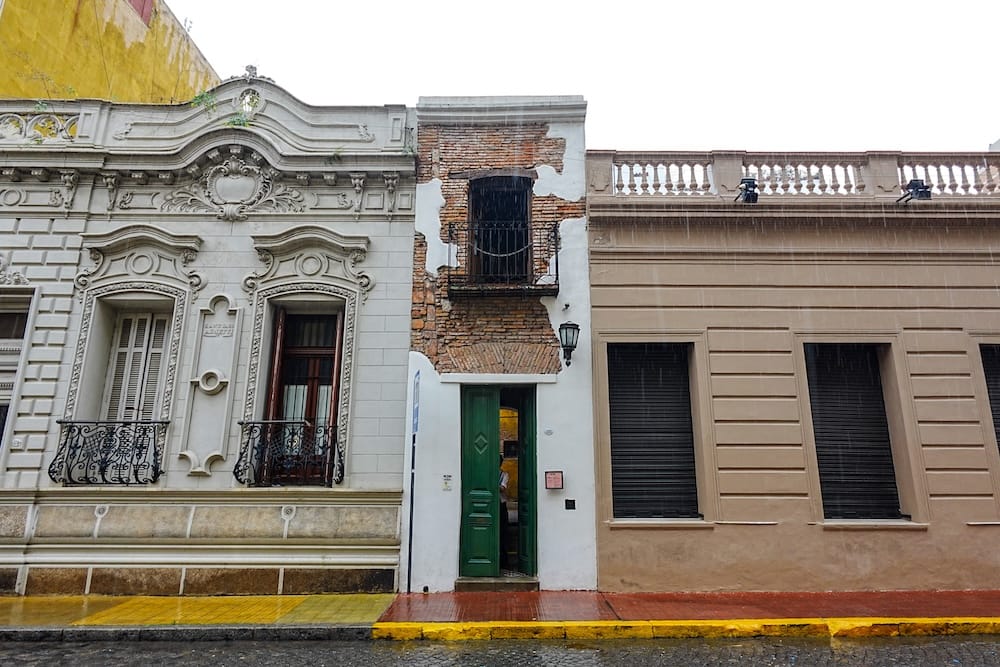
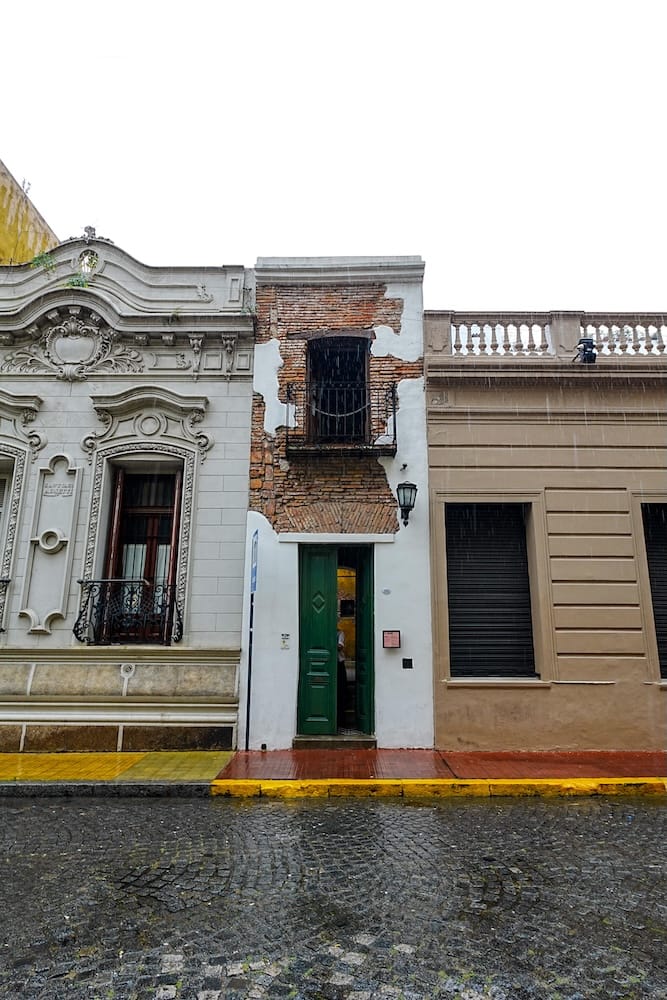
Then, we crossed over to Casa Mínima for another guided visit. This is the only way to see the inside of the narrowest house in Buenos Aires, and again, it’s a place that had been on my list for a while now!
The front of this house is just 2.5 metres wide, so I didn’t really know what to expect. Before visiting, I imagined this would be a tiny house, and I honestly wondered what we were going to do in there on the 45-minute tour!
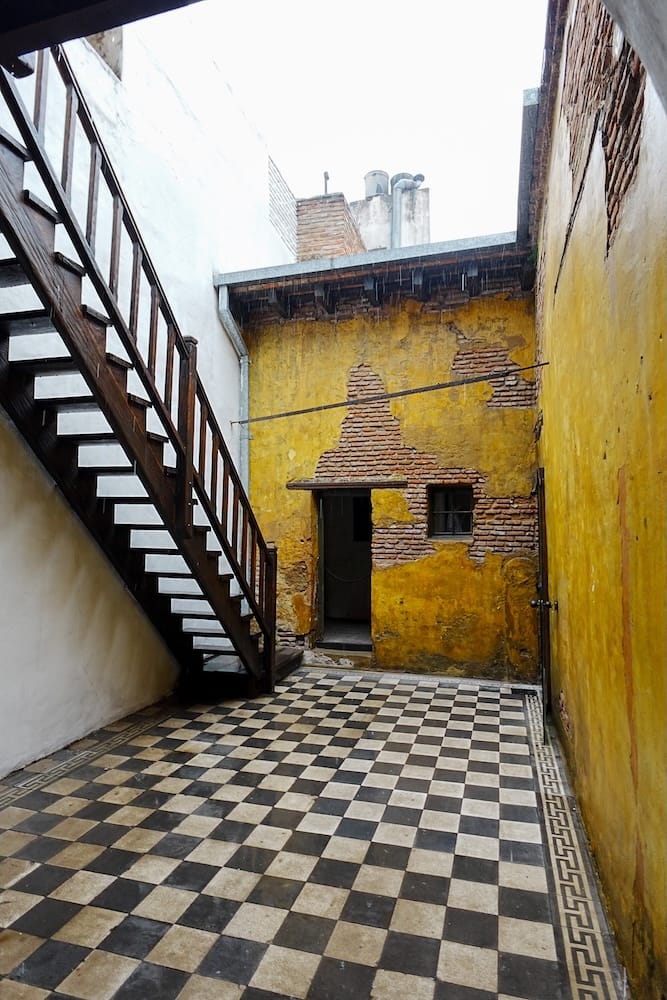
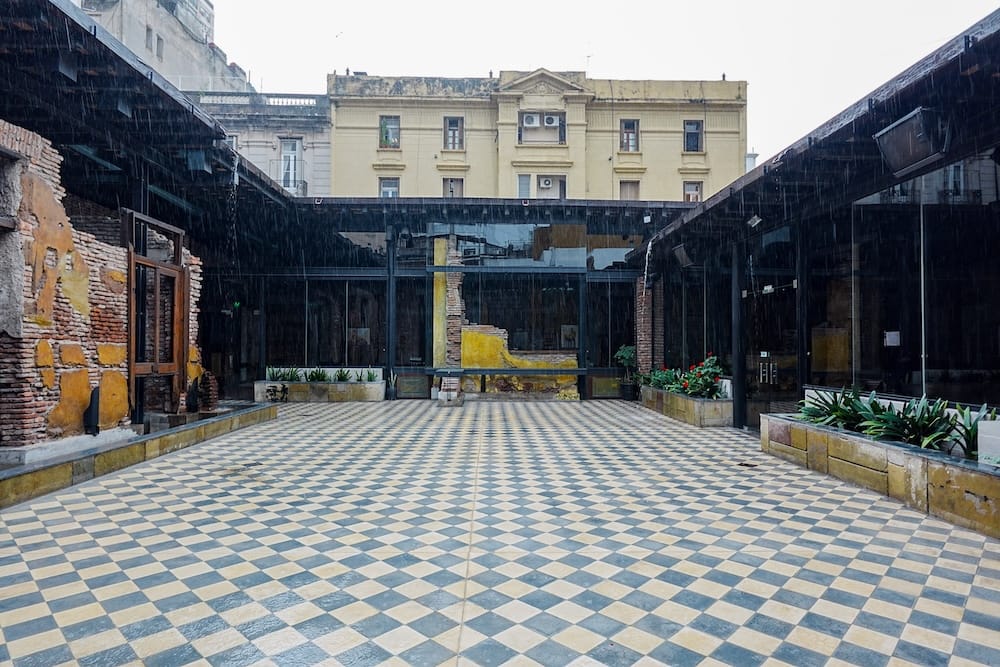
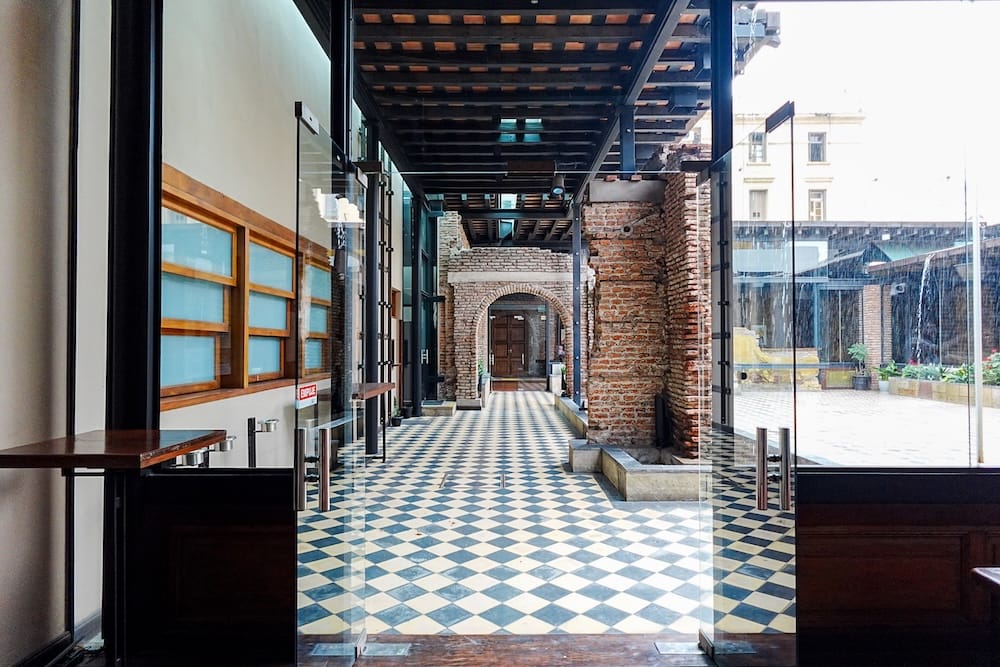
We first walked into a courtyard with white and black checkerboard floors, and because our guide started talking here, I assumed this was the entirety of the space!
I was very surprised when he then led us through this old wooden door, and it gave way to an open-concept space with numerous rooms and a much larger courtyard. Like, how is all of this hiding behind such a narrow facade?
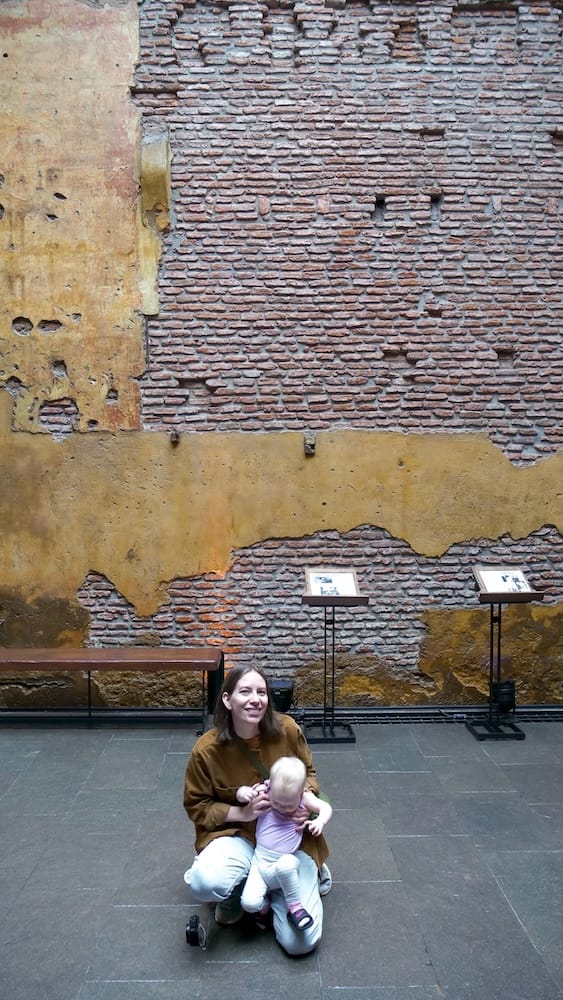
Once inside, we got to see the different layers of construction preserved on the walls: exposed brick, plaster and layers of paint. I learned that this place had many uses over the years, including family home, tenement housing and even a tango hall. The latter isn’t very surprising as San Telmo is home to numerous tanguerías!
Our guide also cleared one common misconception. There’s a myth that this very small house was given to a freed slave. However, this is not supported by any historical documentation. In fact, what records tell us is that the narrow house resulted from subdivisions of a larger lot.
All in all, another very cool tour and what a surprise to see all that lay beyond that narrow facade.
Visiting with a baby or mobility limitations
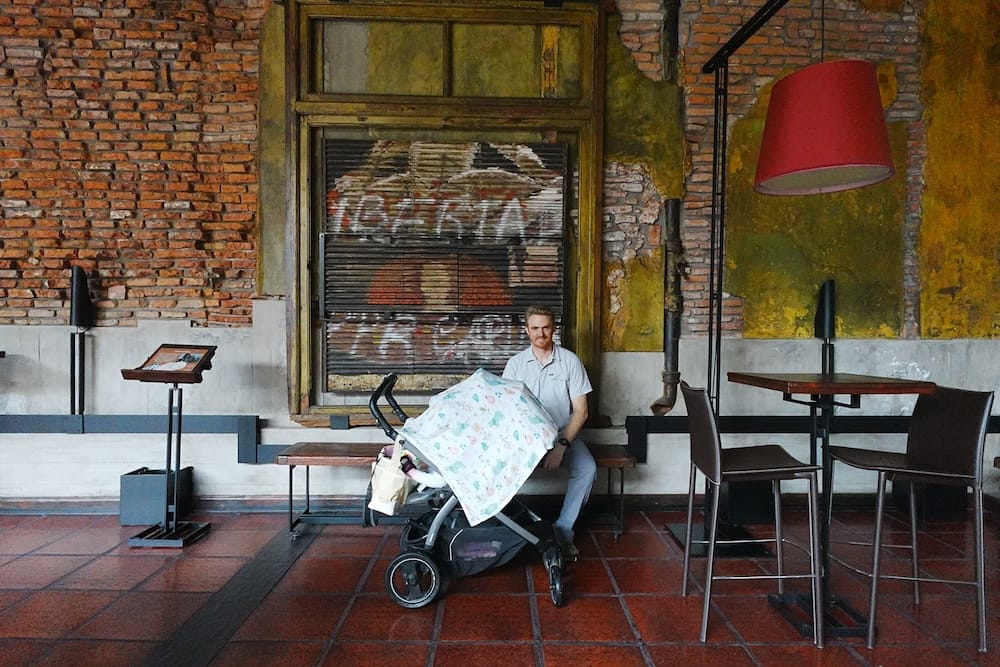
Now let’s talk about accessibility for both of these attractions, because that’s something to consider. We took our daughter with us who was one at the time and using a stroller.
I wouldn’t describe El Zanjón or Casa Mínima as the most baby-friendly activities in Buenos Aires.
For starters,
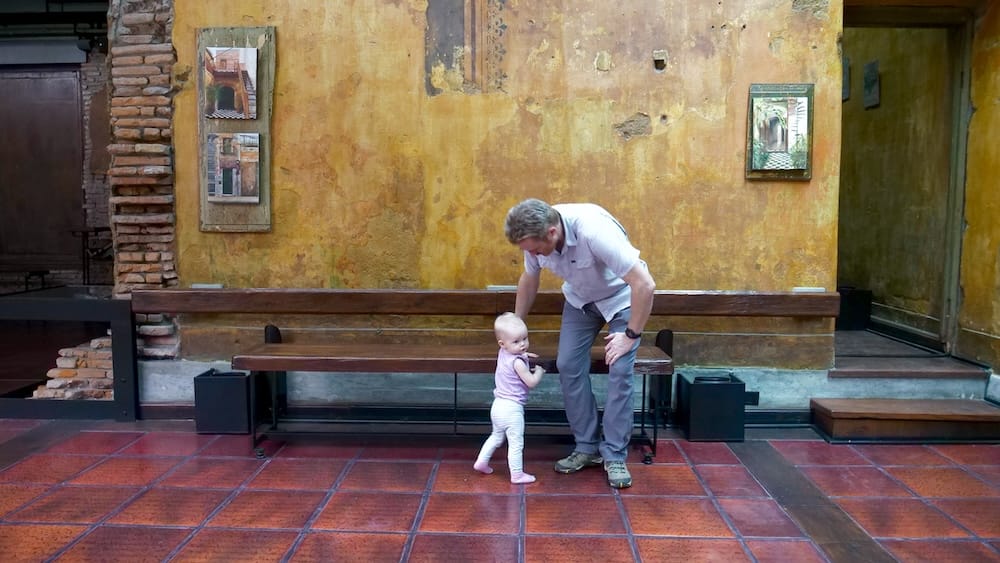
Our big-wheeled stroller was useful on San Telmo’s uneven streets, but inside the property we had to make adjustments. We carried it over a few ground-floor steps, used an elevator to reach basement level and then left the stroller behind for part of the visit. Downstairs, we walked with our daughter while holding her hands because there are walkways with railings.
Casa Mínima was a bit easier, because aside from going up a small flight of stairs right after entering through the front door, there was more space for her to roam.
Another consideration is that this is a guided historical visit where people have paid to listen to an explanation, which can be a little difficult when you’re travelling with a baby, toddler or a young child who’s eager to walk around and contribute their own commentary. When she became particularly chatty, we stepped away from the group rather than interrupt everyone else’s tour.
We made it work, and I’m glad we finally took the tour after wanting to visit for so long, but it took a fair amount of attention. The operator permits children and strollers and provides lift access to much of El Zanjón, you’ll want to keep a very close eye on your little one.
El Zanjón or Casa Mínima: which would I choose?
Both tours appealed to my interest in Buenos Aires’ history, and I was happy we visited them together. They also made a good comparison: El Zanjón revealed history under the property, while Casa Mínima revealed how much lay beyond the narrow facade.
If you only have time or money for one, I’d choose El Zanjón. The underground passage and the guide’s explanations made it one of my favourite historical experiences in San Telmo, and the longer tour gave us more time to understand how the property had changed over the centuries.
That doesn’t mean Casa Mínima was a disappointment. I loved how the tiny exterior gave so little away, and the tour taught us things we wouldn’t have learned from just standing on the sidewalk. If you enjoy architecture and have time for two standard tours, I think it’s worthwhile seeing both; Samuel and I certainly felt we’d received good value from the visits.
E-SIMS – I use Saily when I travel. This is a must to stay connected and not incur crazy roaming charges.
TOURS – My two go-tos for booking tours and activities are Viator and GetYourGuide.
HOTELS – I like Booking.com because they have the most variety of properties to suit all budgets and travel styles.
TRAVEL INSURANCE – Don’t leave on your trip without booking travel insurance. You can get a quote on SafetyWing.
CAR RENTAL – The best way to explore Argentina beyond the cities is to rent a car. I use Discover Cars because they have rentals across the country.