
San Telmo is one of those Buenos Aires neighbourhoods that I never seem to tire of exploring. Give me a few cobblestone streets, some colourful murals, historic mansions filled with antiques and a café that looks like it hasn’t changed in a century, and I’m quite happy to spend the day wandering around.
I’ve been visiting San Telmo since my early backpacking days, when I first discovered Buenos Aires and joined a bicycle tour through the neighbourhood. That trip also involved a tango class, a tango show and a pub crawl, so I got a rather lively introduction to the city! I’ve returned to San Telmo on different occasions since then.
More recently, Samuel and I spent two days exploring the neighbourhood with our daughter. We’ve been making a point of getting to know the different barrios of Buenos Aires, and since it had been roughly a decade since I’d properly explored San Telmo, I was curious to see what had changed.
We visited some beautiful historic buildings, ate our way through the covered food market, enjoyed breakfast in one of the city’s traditional bars and finally explored the underground tunnels at El Zanjón de Granados.
We also discovered that visiting San Telmo with a stroller requires a little more effort than you might expect. Between the cobblestones, narrow sidewalks and staircases inside historic mansions, our all-terrain stroller certainly earned its keep.
Having visited San Telmo at different stages of my life, I think it’s a neighbourhood that deserves a full day on your Buenos Aires itinerary, particularly if you enjoy history, architecture, antiques and food.
In this guide, I’ll share my favourite places to visit, the experiences I would prioritize if I only had one day, where we ate and the practical details worth knowing before you go.
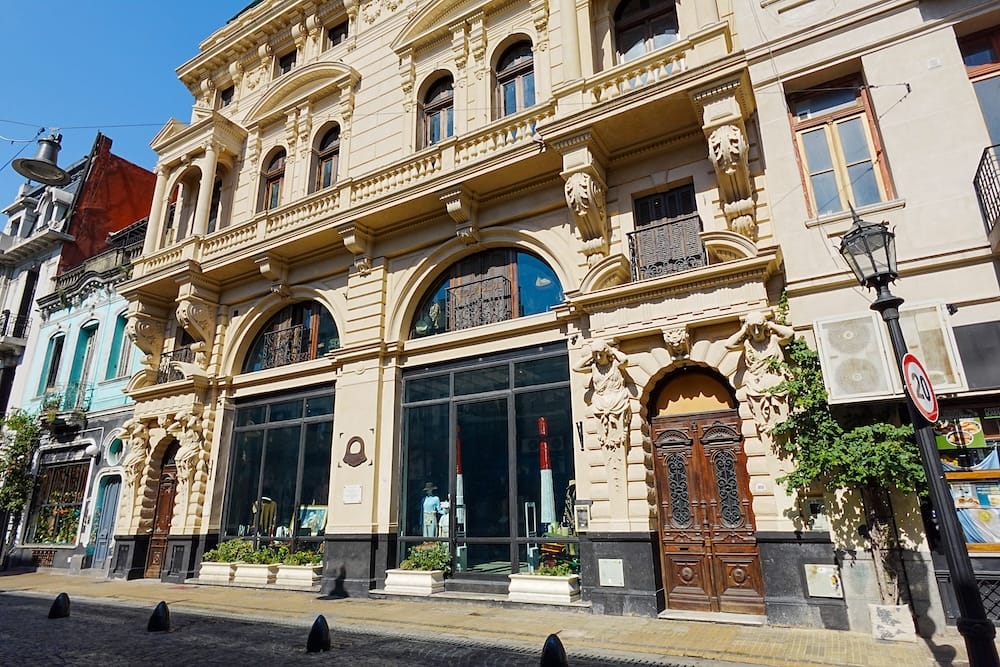
Planning a visit to San Telmo?
🔎 Go into the underground tunnels at El Zanjón de Granados.
💃 Attend a tango show at La Ventana.
🛎️ Stay at Anselmo Buenos Aires overlooking Plaza Dorrego.
Things to Do in San Telmo
San Telmo is one of those neighbourhoods that is best explored on foot by following your own curiosity. Many of its highlights are small, understated places that you might otherwise walk right past. So go into those hidden courtyards, historic markets, and colonial mansions, because sometimes it doesn’t look like much from the outside, and all of a sudden you’re transported to the past!
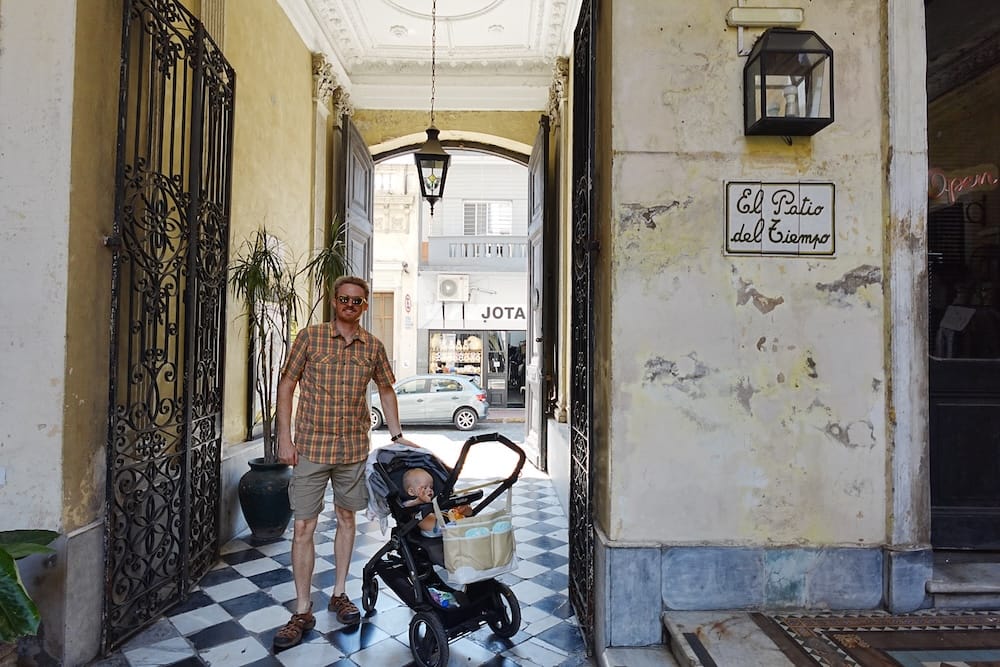
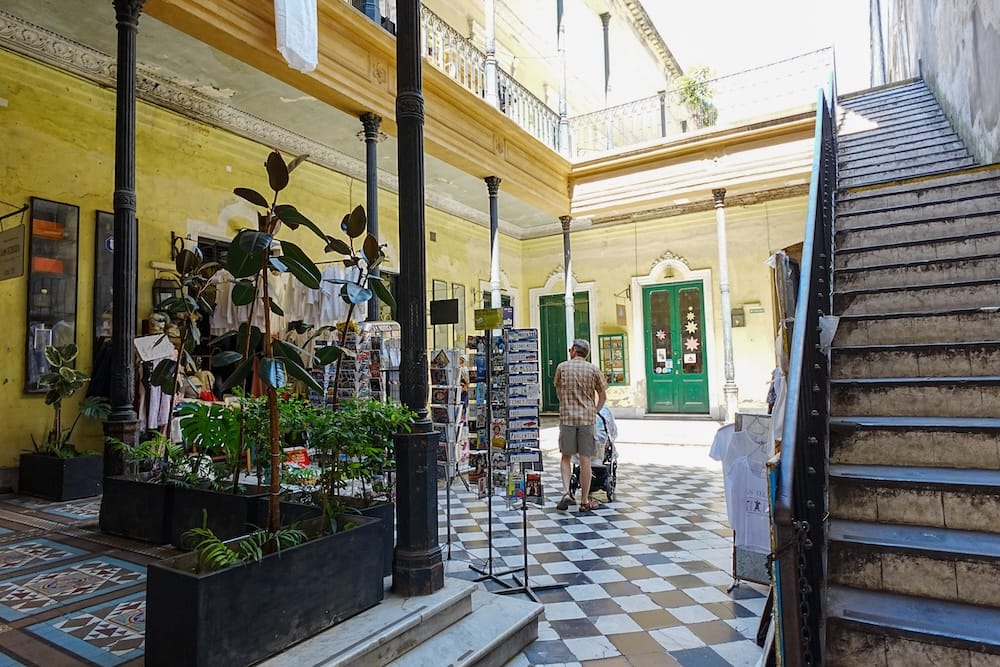
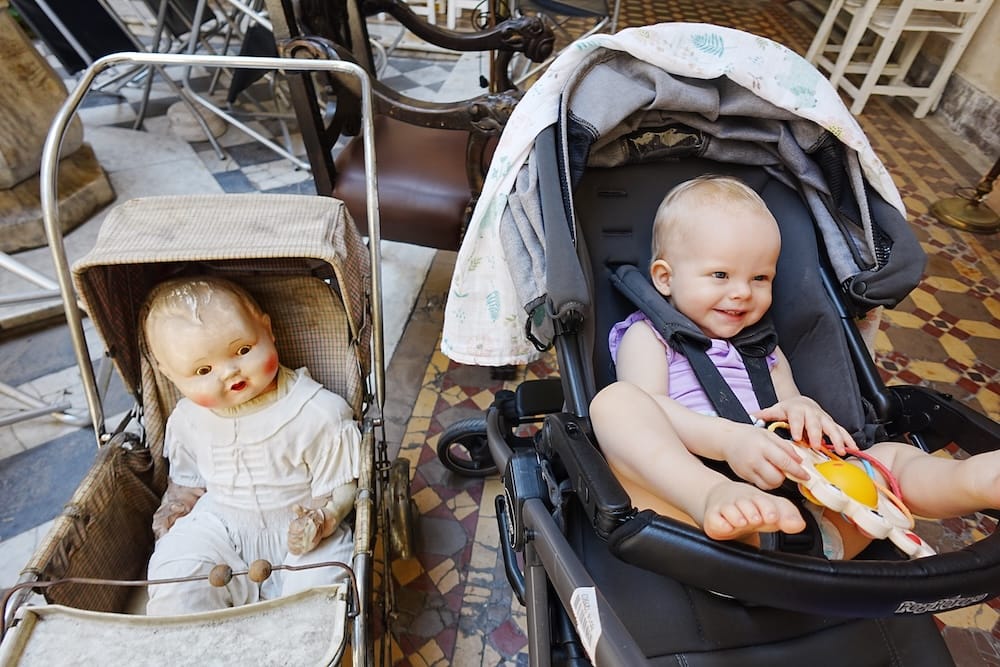
Pasaje de la Defensa
Pasaje de la Defensa is a pretty iconic landmark in San Telmo, and I like that it shows you how the neighbourhood’s older buildings have been adapted over the years.
Once known as Casa Ezeiza, this mansion was built for the Ezeiza family in 1876. But soon after, the yellow fever epidemic hit, and the family escaped further north.
The home was then transformed into a conventillo, or tenement house, which by 1930 housed 32 families!
Today, it is a shopping gallery with three interior courtyards that we enjoyed roaming. We came across shops selling souvenirs, magnets, sunhats, football jerseys and even antiques. The one that caught our attention was an antique doll in a stroller, from who knows what decade, that was almost as big as our one-year-old girl!
The space itself is beautiful, with multiple patios (each with its own name) and a staircase that leads up to the second floor, where there are even more shops.
Solar de French
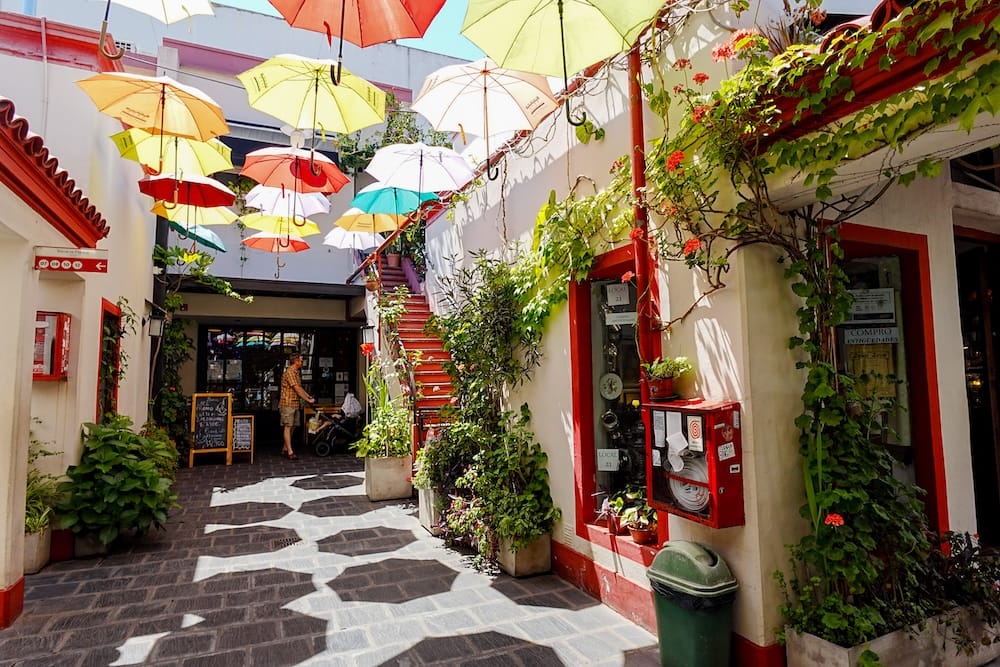
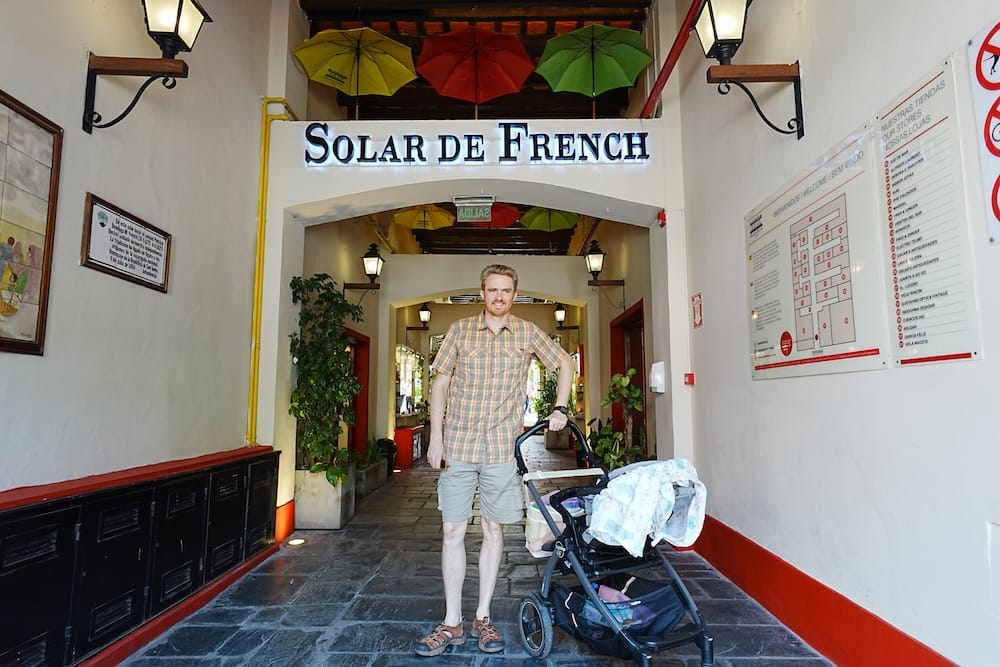
Solar de French is another historic shopping gallery in San Telmo, and it’s best known for the colourful umbrellas that hang above the courtyard. Having visited in summer, I can tell you they offer a nice shady reprieve!
We learned a bit of history on our visit; as soon as we entered, we saw a mural and a plaque on the left-hand side. That’s because this spot has an important connection to Argentina’s independence.
This was the birthplace of Domingo French, born in 1774, who later became involved in the May Revolution of 1810.
During our visit, Samuel spotted a shop filled with antiques and immediately said it reminded him of my grandmother’s house in Lima. I had to agree with him! There was something about the sculptures, furniture and paintings that screamed Old World and made me smile. That was a funny little family connection to find while exploring Buenos Aires.
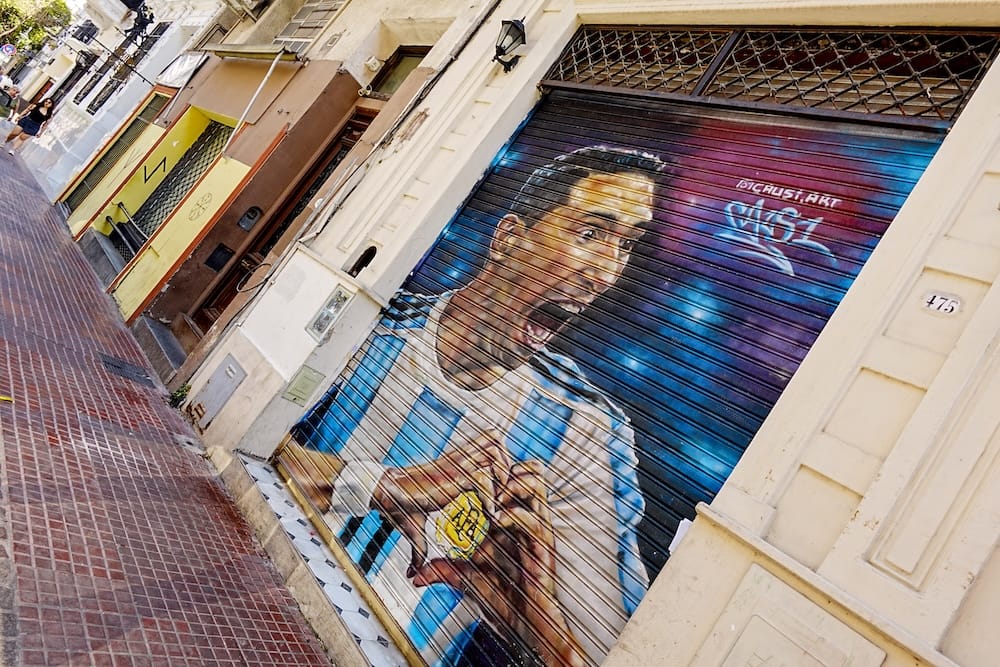
Street art and football murals
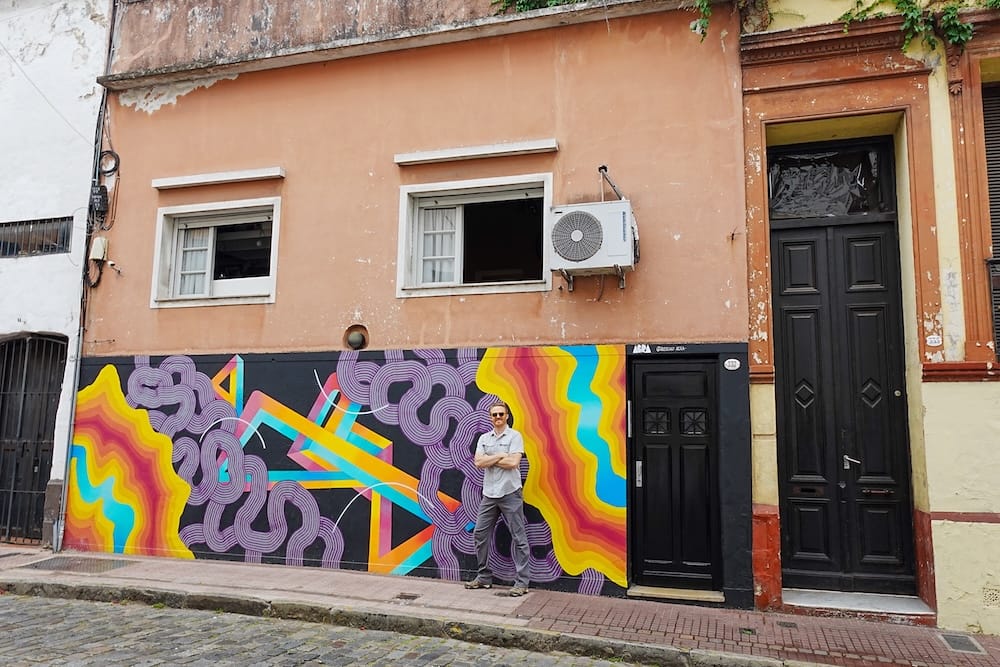
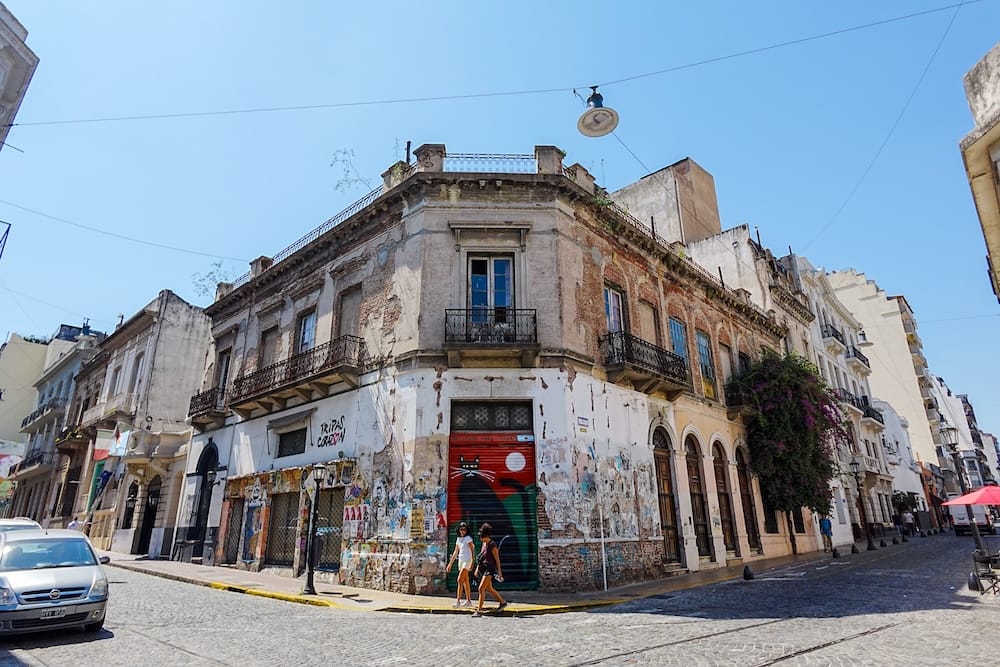
One of the things I like most about the neighbourhood of San Telmo is that there is so much to see! There are so many textures, and it feels like everything is competing for your attention: the crumbling mansions, the cobbled roads, the murals of futbol heroes, the ornate balconies, the ivy crawling up the side of buildings.
I recall Sam commenting that he felt like his head was on a swivel; look here, look there, look up, look down! There were so many layers and textures.
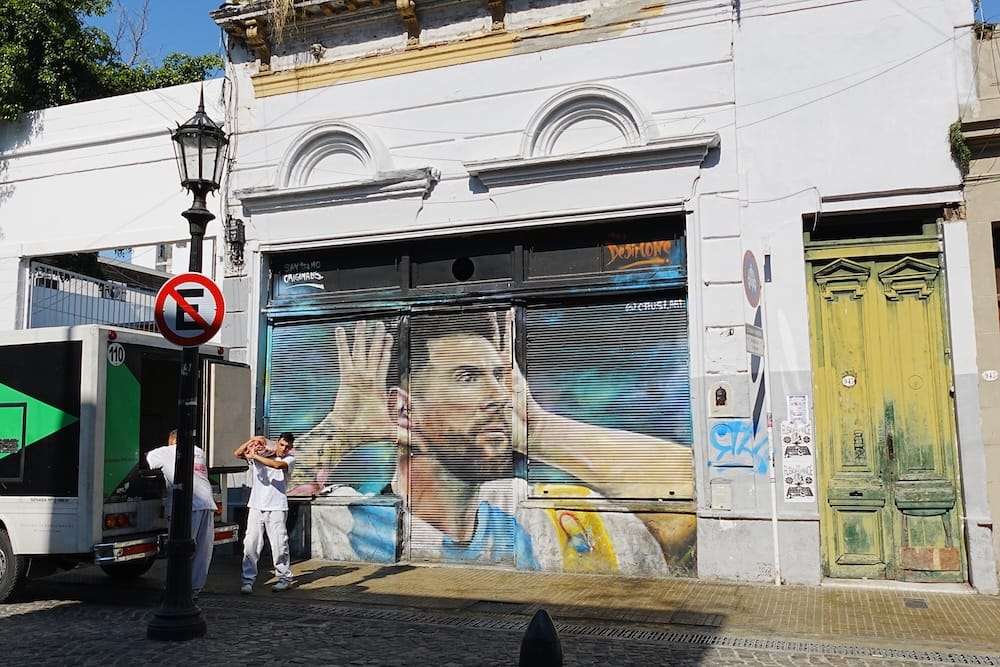
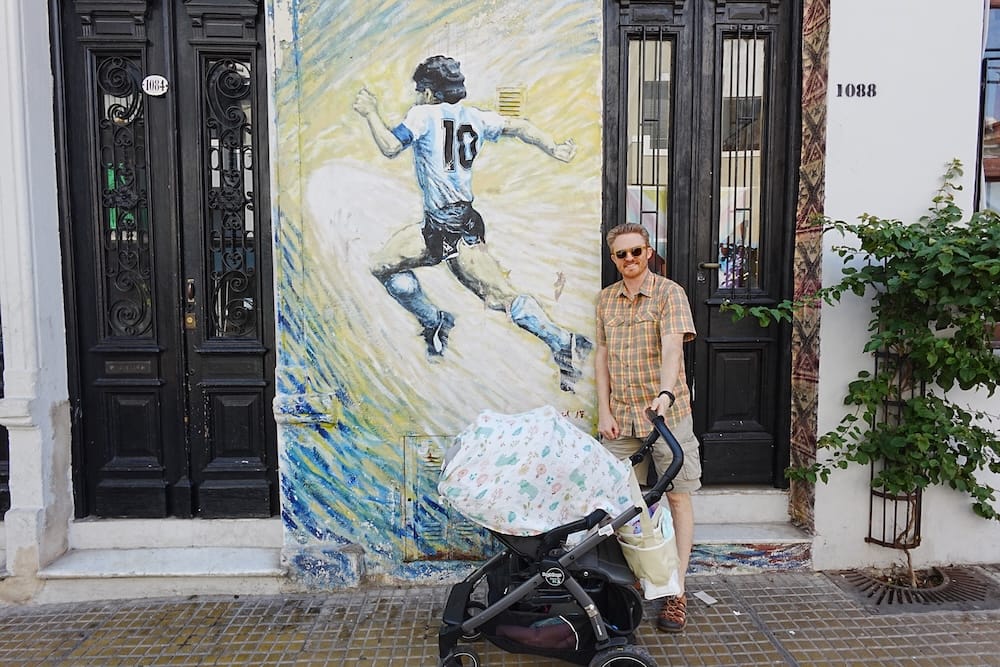
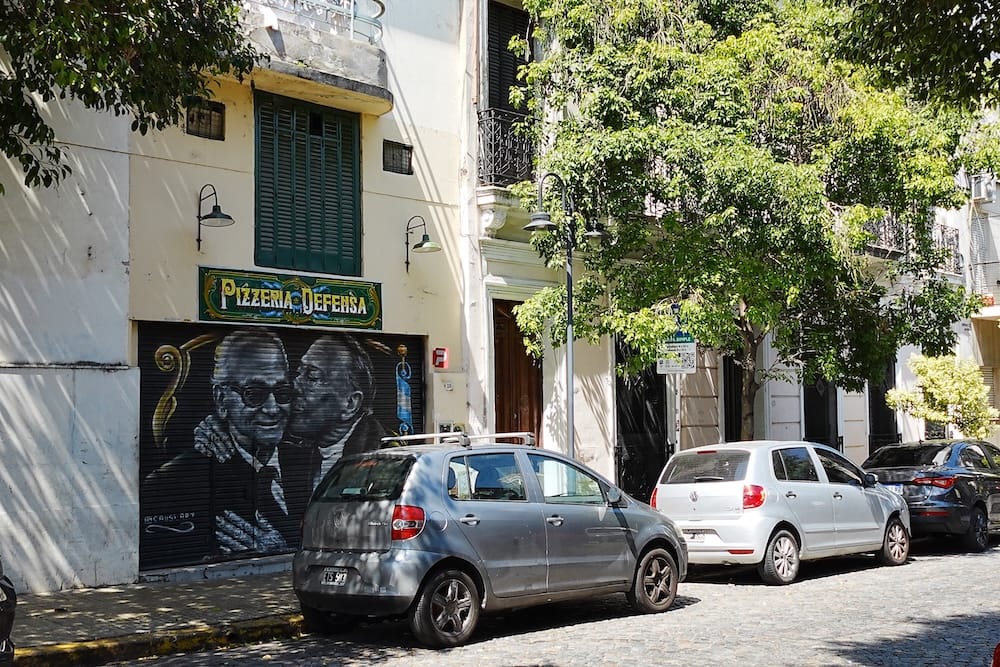
One of the prominent themes we noticed in the local street art is Argentine futbol legends. We came across murals of Lionel Messi, Maradona, and Di Maria. And the funny thing is that we weren’t even trying to track these down! We just came across them naturally, which makes me wonder how many others we maybe missed.
Mafalda and Paseo de la Historieta
Another cultural landmark in San Telmo worth looking for is the Mafalda sculpture on the northeast corner of Defensa and Chile.
In case you’re not familiar with Mafalda, she is a beloved Argentine comic-strip character. She’s a petite six-year-old girl who is concerned with the world, questions adults and dislikes soup.
Her sculpture forms part of Buenos Aires’ Paseo de la Historieta, or Comic Strip Walk, which spreads from San Telmo into neighbouring areas.
I think the Comic Strip Walk could be a fun activity if you’re visiting BA with kids. You can see the full walking route here.
San Telmo’s Markets
San Telmo is famous for its markets, but it’s important to understand that there are three very different market experiences. You have the covered Mercado de San Telmo, the famous Sunday Feria, and the smaller stalls around Plaza Dorrego. I’ve been to all three over the years, so let’s talk about the differences.
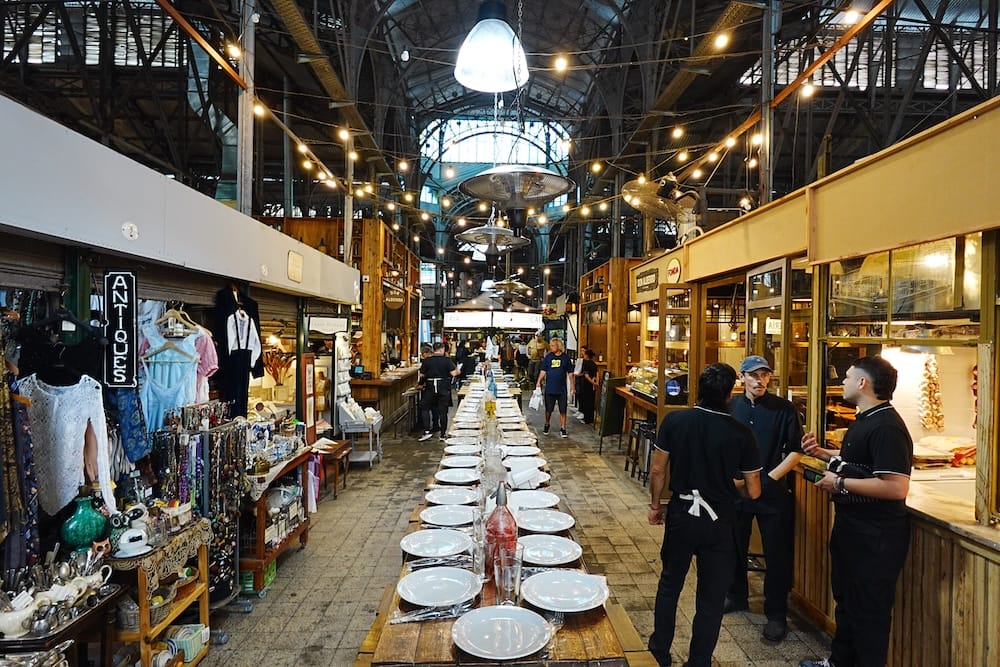
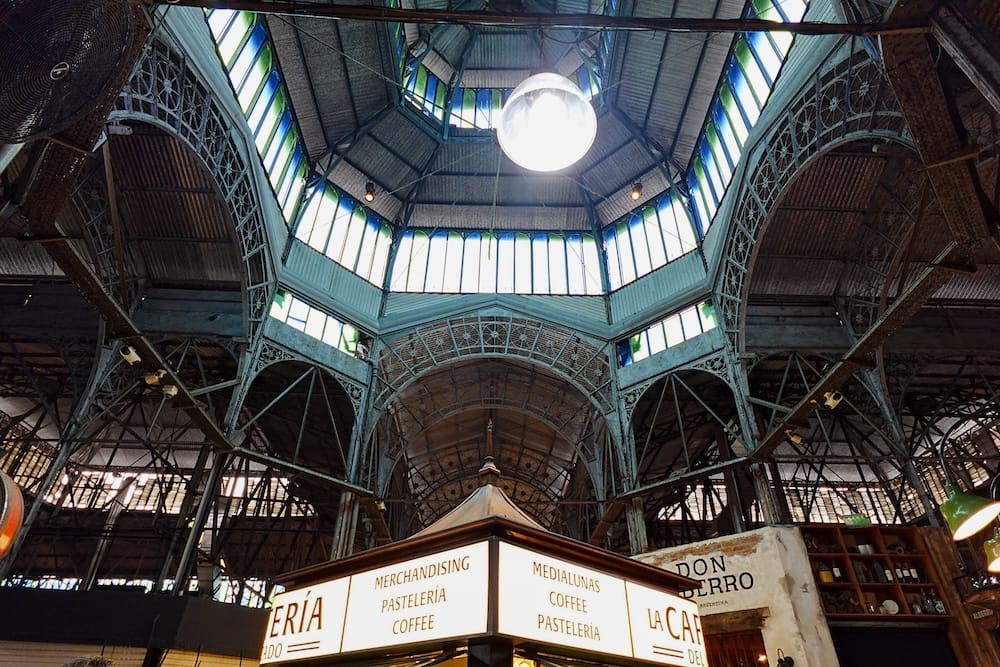
Mercado de San Telmo
Mercado de San Telmo, also known as the San Telmo Market, is the historic covered market hall. This spot combines restaurants, fresh produce, antiques, leather goods, football jerseys and souvenir stalls all under one roof.
It’s a pretty cool building that dates back to 1897, and it has an Italian-style exterior with a wrought-iron interior. I think it’s quite beautiful and worth a peek even if you’re not looking to shop or eat.
One thing I noticed on our return visit was how much the food scene has expanded compared to a few years back. We had so many options to choose from, including parrilla, pizza, empanadas and other traditional Argentine dishes. In the end, we settled for an array of empanadas at El Hornero.
We arrived at around 11:00 am, when things were still getting started. Though, like us, there were already a few tourists having a very early lunch.
Feria de San Telmo
If you happen to be in the neighbourhood on a Sunday, then the Feria de San Telmo is the place to be. This is an event where the streets become the market and vendors line either side of the road with stands, or they just lay their wares on the ground.
It takes place around Plaza Dorrego and extends for several blocks down Calle Defensa. It runs from 10:00 am to 5:00 pm.
What I like about this particular market is that it’s good for handicrafts, antiques, and even leather goods. I’m particularly fond of the old soda sifón bottles in bright colours, along with the beautifully painted fileteado signs (a type of decorative lettering that is very characteristic of Buenos Aires).
Of course, it’s always best if you can visit the market on a sunny day, as this fair is entirely outdoors.
Plaza Dorrego
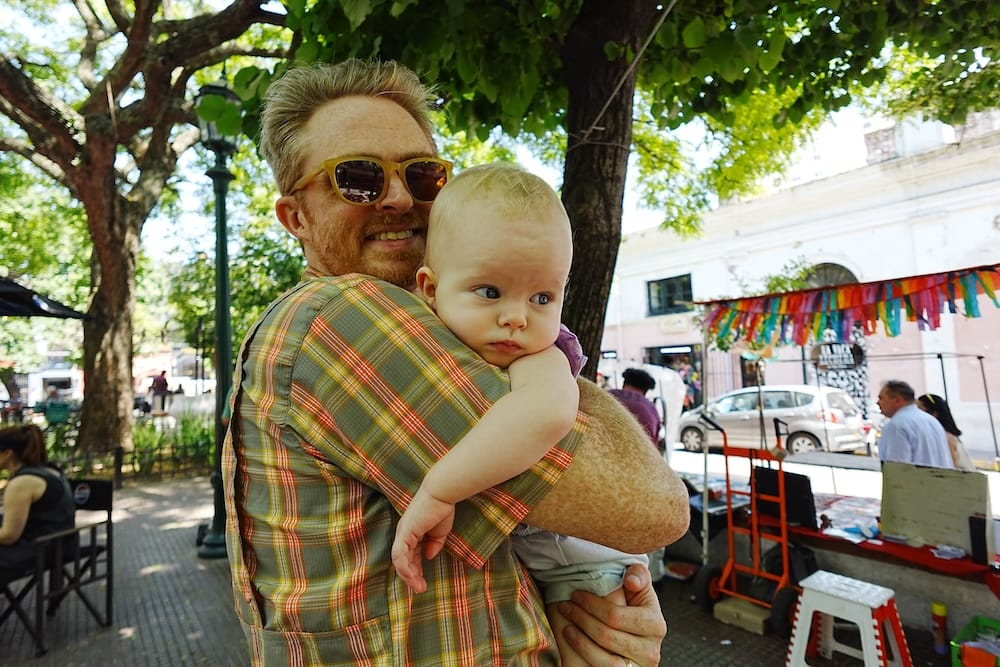
The third market option is Plaza Dorrego on any day of the week, aside from Sunday. Because San Telmo sees a lot of visitors every day, a market still sets up, though on a smaller scale.
You can find stands lining the perimeter of the square, and again, it’s a nice mix of souvenirs like jewellery, tote bags, leather bracelets, baseball caps, t-shirts, paintings, mates and bombillas.
Now, from personal experience, I will say: don’t go too early in the morning because vendors won’t be set up yet, and know that the options will be limited if you go on a rainy day.
On our recent two-day visit, Samuel and I didn’t have much luck with our timing. On our first attempt, we arrived too early, and when we returned the following day, the rain in the forecast kept some of the vendors away.
There were still people browsing and shopping, and I appreciated the sellers who made the effort to show up, but the atmosphere was nowhere near as lively as I’d remembered from previous visits.
El Zanjón de Granados
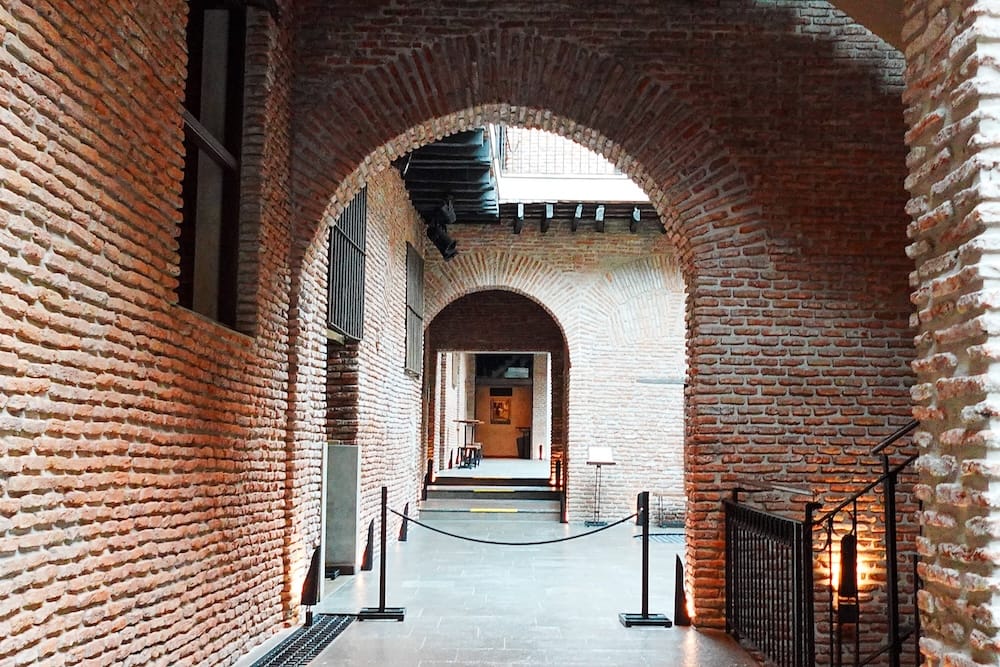
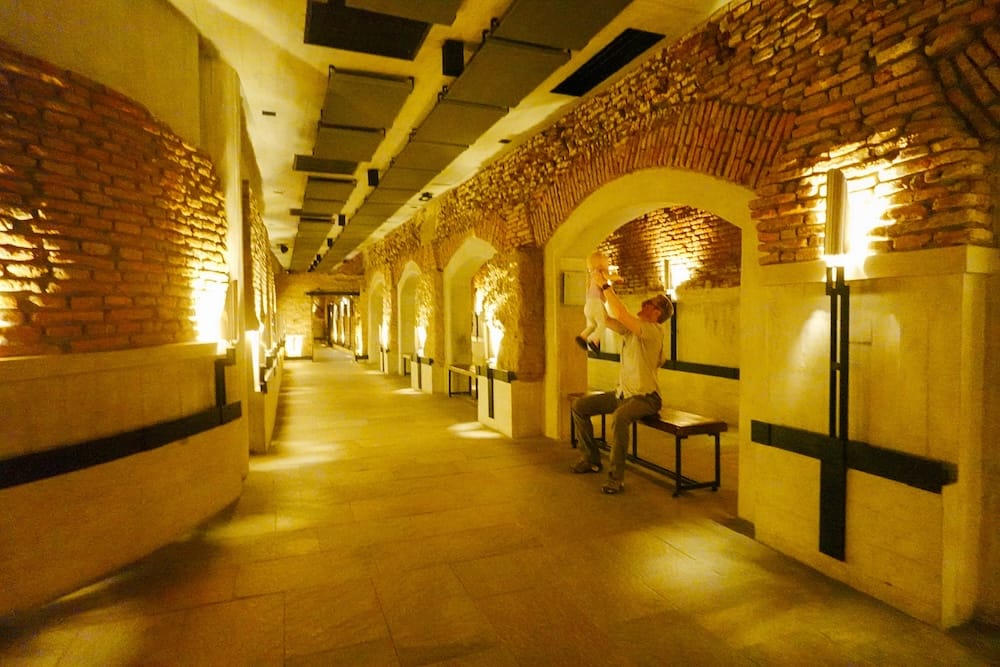
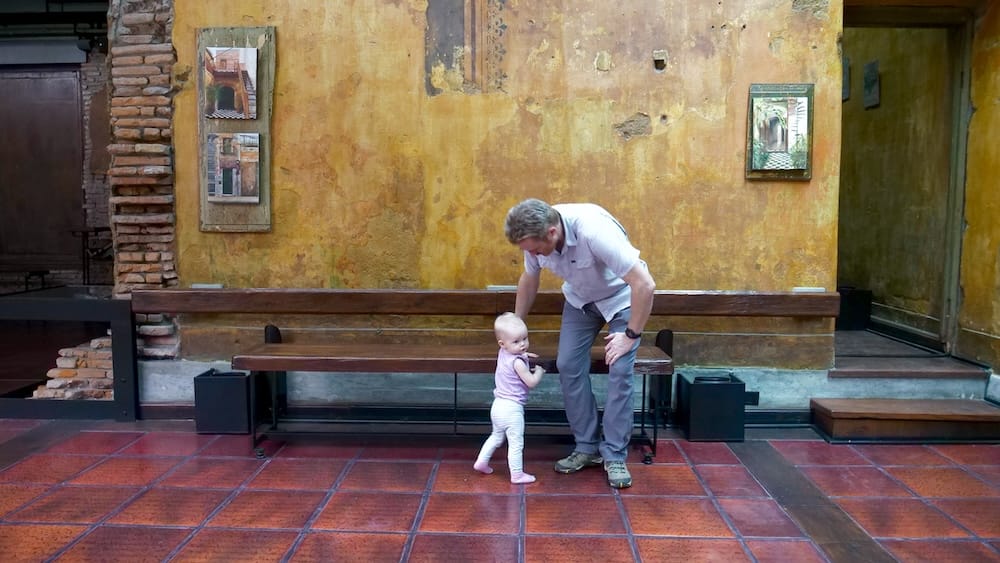
El Zanjón de Granados is one of the coolest attractions in Buenos Aires, in my opinion. I had been wanting to go underground, walk the tunnels and see the remnants of the city’s early days for a very long time. So, we finally signed up for a guided tour, which is the only way to see this place, by the way.
El Zanjón was once a grand family home. However, when the yellow fever epidemic hit the city, the wealthy families packed up and moved north, leaving behind these mansions.
This home was eventually divided up and turned into a conventillo, or tenement housing, for the newly arrived immigrants. It had 23 bedrooms and only two bathrooms. And after that chapter, it fell into disrepair and became a dumping ground for garbage.
That is until Jorge Eckstein bought this crumbling house, thinking he would turn it into a restaurant. Little did he know he had stumbled upon what would become the biggest archaeological recovery in all of Buenos Aires!
It turns out there were even more layers of history underneath the mansion, including the old watercourse where a stream once flowed and the foundations from the city’s early days.
And that is what we got to see on this tour: all the layers of the city’s early history. The 1-hour tour honestly flew by, and I would recommend it if you’re into architecture or want to learn some history.
We also happened to do visit on a very rainy day in Buenos Aires and I can confirm that it’s a great choice when it’s pouring out!
Casa Mínima
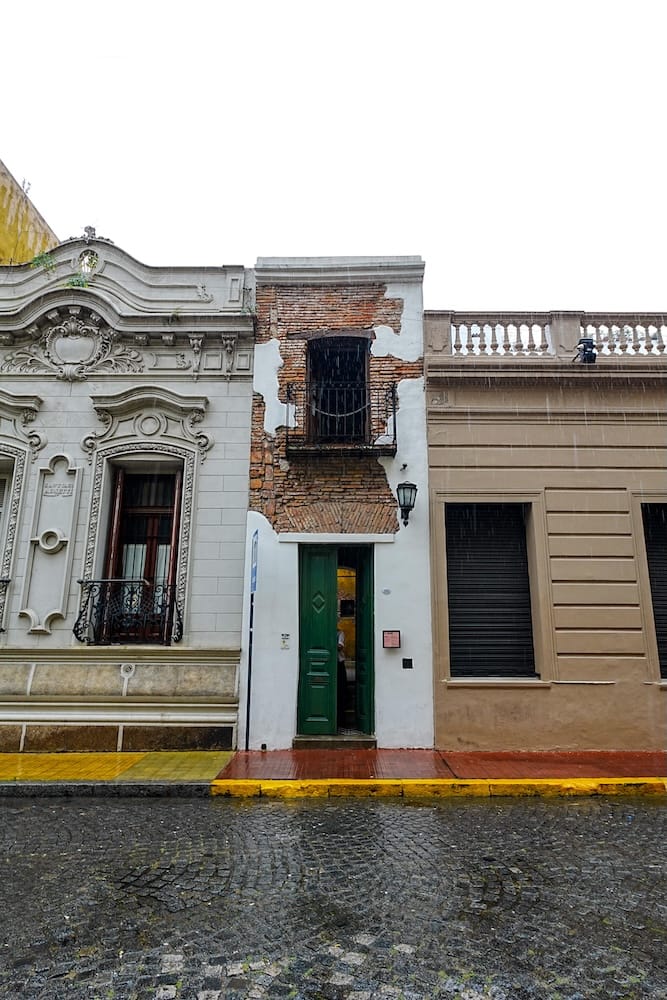
Right after visiting El Zanjón, we walked down the block and joined another guided tour at Casa Mínima. This is one of Buenos Aires’s most unusual historic properties because its front is only 2.5 metres wide, making it the narrowest house in Buenos Aires!
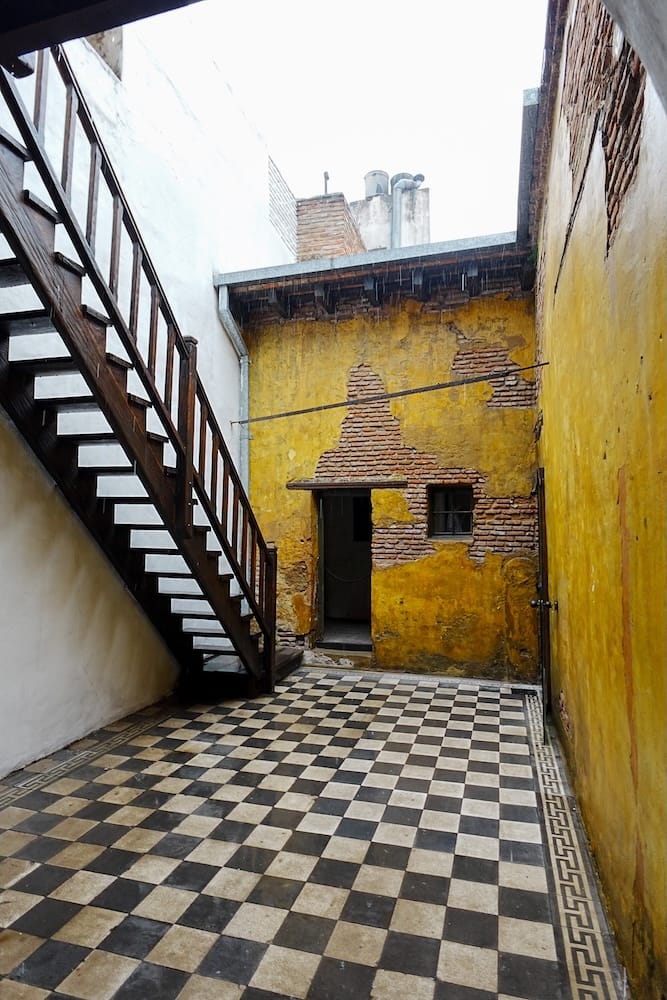
But the real surprise was once we went inside. I was envisioning some sort of tiny house, and I was honestly wondering how we were going to spend a whole 45 minutes in a tiny space. I mean, how much could there be to see? But as it turns out, Casa Mínima is a lot bigger than it looks from the street.
During our tour, we learned how this space was used over the years. There’s a tale that says this home was gifted to a freed slave, but no historical documentation has been able to prove this. What we do know is that this former mansion was divided up into tenement housing, and that at one point it housed a tango hall.
Tours in San Telmo
When I first visited Buenos Aires as a young backpacker, I spent quite a bit of time in San Telmo and I went on a lot of tours! I joined a bicycle tour of the neighbourhood, took a tango class, and even went on a pub crawl. It was a very different style of travel from returning years later with Samuel and our daughter, but those early experiences are part of why I still think San Telmo is such a fun introduction to Buenos Aires.
San Telmo by bike
A bicycle tour is a really fun way to experience San Telmo. This is something that I did on my first visit to Buenos Aires, and it gave me a good lay of the land, plus I got to see a lot of attractions along the way.
I still remember the way my bike rattled down the cobbled streets in San Telmo, but thankfully the entire route isn’t like that!
I was visiting with a friend and we both signed up for the Buenos Aires South Tour with La Bicicleta Naranja. Their 3-hour tour covered four neighbourhoods: San Telmo, Puerto Madero, La Boca and Monserrat.
Along the way, we saw major attractions like Parque Lezama, Caminito, La Bombonera, the Ecological Reserve, and Plaza de Mayo, just to name a few.
And we also got plenty of culture and history along the way: the colonial days, immigration, the dockyards, futbol and plenty of anecdotes.

Tango class and show
San Telmo is one of the best places to watch a tango show in all of Buenos Aires because most of the tanguerías are located here! Some of the more famous shows in this neighbourhood include La Ventana, El Querandi and El Viejo Almacén.
My first ever tango show was at La Ventana Barrio de Tango. I have very vivid memories of the venue because it is set in a former conventillo, so it has an old time feel with vaulted brick ceilings and stained glass windows.
Another aspect I enjoyed about this show is that it combined tango and folklore, which are two completely different styles of dance. The latter is strongly tied to gaucho culture.
When I booked this experience, I opted for the tango lesson, the 3-course dinner and the show. It was a really fun evening out and a quintessential Buenos Aires experience that I love to recommend to first-time visitors!
You may also encounter tango performances at Plaza Dorrego, especially if you visit on a weekend and during the warmer months. Watching is free, and you can leave a tip at the end.
Museums in San Telmo
If you’re especially interested in art, there are a couple of additional museums in San Telmo that could easily fill another hour or two of your visit.
National Historic Museum
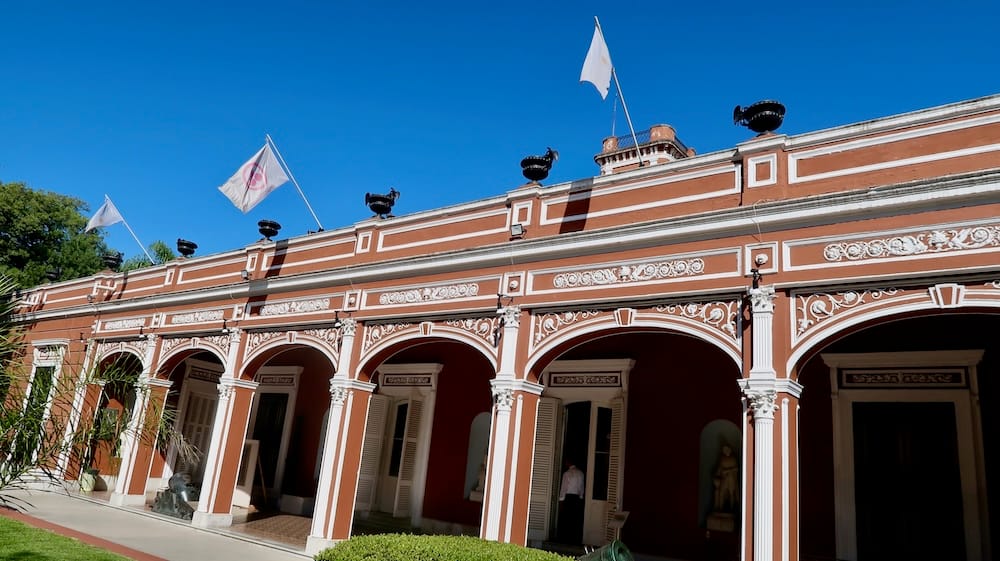
Museo Histórico Nacional is located in a beautiful old mansion beside Parque Lezama.
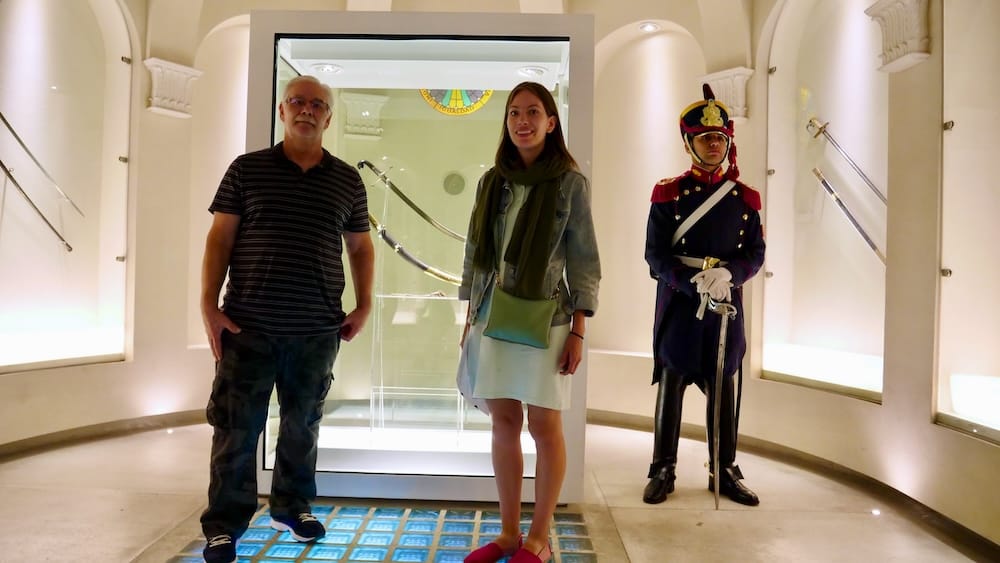
We visited a few years ago with my dad, who was particularly excited to see José de San Martín’s famous curved sabre, one of the most treasured objects associated with Argentina’s fight for independence. Since then, San Martín’s original sabre has been transferred to the Regimiento de Granaderos a Caballo in February 2026, so it’s no longer on display here.
That being said, the museum still has a fascinating collection of historical artifacts, including a reconstruction of the bedroom where San Martín spent his final days in Boulogne-sur-Mer, France, complete with original furniture donated by his granddaughter!
It’s a cool spot for anyone interested in Argentine history, and the surrounding Parque Lezama is very green with loads of mature trees and leafy paths. We enjoyed the greenery, although we didn’t linger long enough for a proper walk.
Museo Moderno
If you like modern and contemporary art, Museo Moderno is another attraction in San Telmo to add to your list.
It was founded in 1956 by art critic Rafael Squirru, and the museum’s focus is Argentine modern and contemporary art, featuring paintings, sculptures, installations and experimental works.
We didn’t manage to visit on our recent outing, but it’s somewhere I’d consider exploring on a return trip, particularly if the weather isn’t cooperating and I’m in need of an indoor activity.
MACBA
Then you have MACBA, also known as the Museo de Arte Contemporáneo de Buenos Aires. It’s next door to Museo Moderno, so you can easily visit both in one go.
This museum grew out of the private collection of Aldo Rubino and has a focus on geometric abstraction, optical art and contemporary works by Argentine and international artists.
Even the building itself is an interesting contrast to San Telmo’s historic architecture, with a glass façade and a modern look.
We didn’t get a chance to explore MACBA either, but I think it would appeal to visitors who enjoy bold colours, abstract shapes and art that experiments with perspective and perception.
Where to Eat in San Telmo
One of my favourite things about exploring Buenos Aires is visiting its historic cafés and bars. The city has a wonderful collection of bares notables (literally, ‘noteworthy bars’) that are recognized for their architectural, historical or cultural significance, and I love finding one where the interior seems to belong to another era.
Bar El Federal
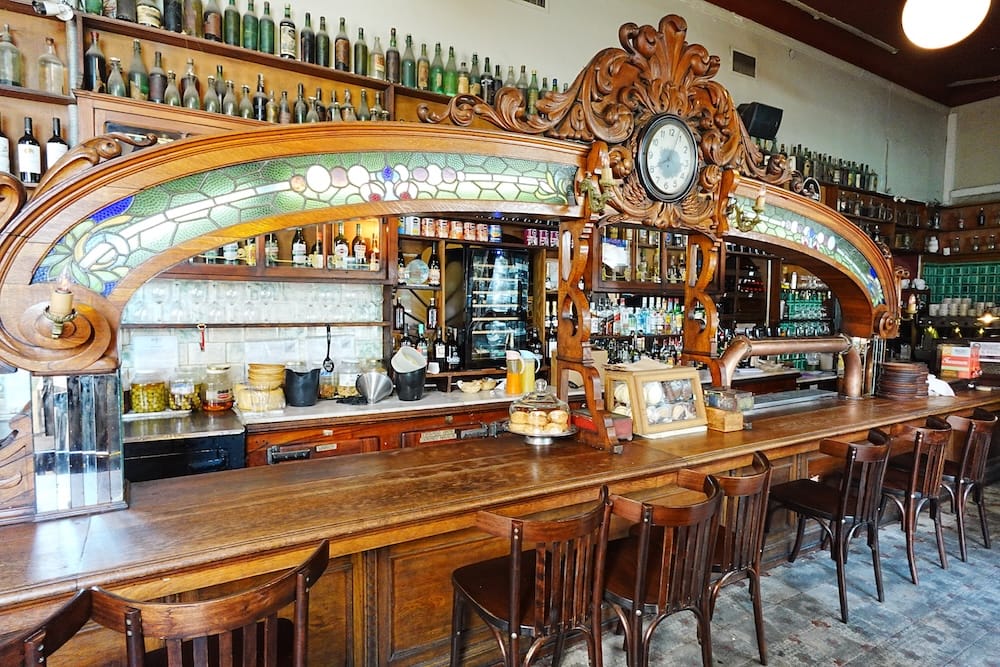
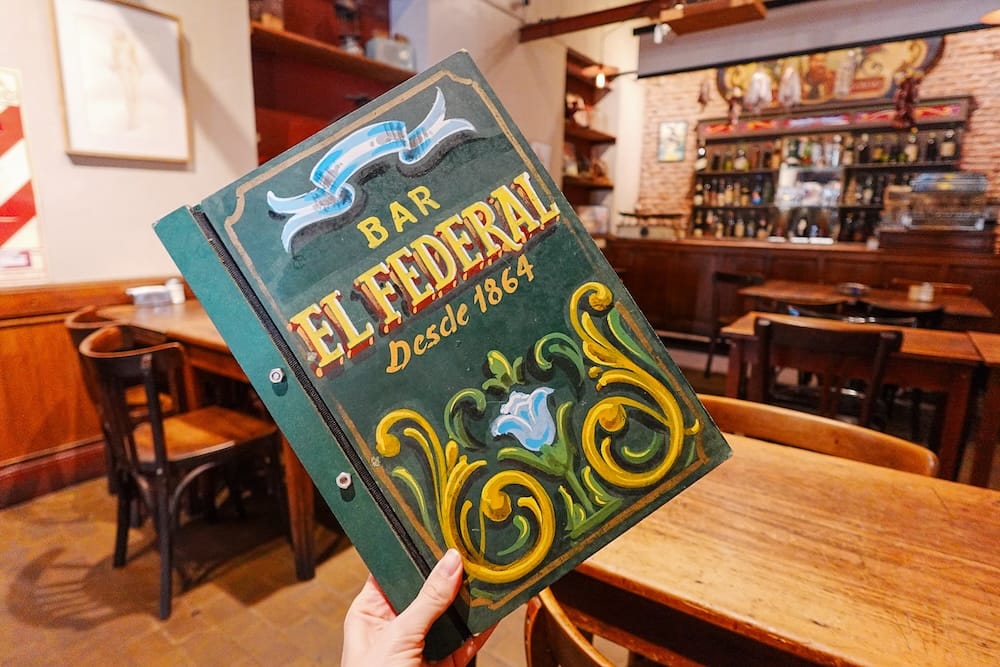
Bar El Federal is hands down one of the coolest bares notables I’ve been to!
The reason? Bar El Federal has one of the most beautiful carved wooden counters you are going to encounter in the entire city. It previously operated as a general store and many of its old products and wares were on display on the shelves.
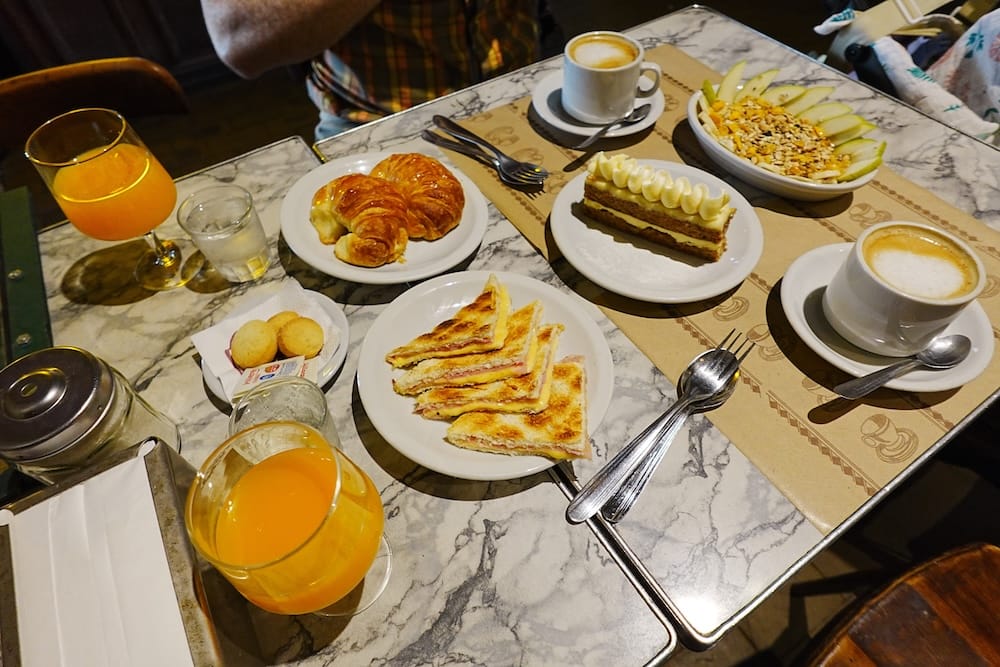
We ordered the breakfast for two, which turned out to be quite a feast. It came with a ham-and-cheese sandwich, two medialunas, carrot cake, yogurt with granola, fruit and nuts, two coffees and freshly squeezed orange juice.
Normally, when we go out for breakfast in Argentina, we’re perfectly happy with a café con leche and a pastry. This was quite the upgrade! There was so much food that we were sampling a little bit of everything, from the savoury sandwich to the pastries, yogurt and cake.
We left feeling very satisfied, and the generous portions made sharing the breakfast a good decision.
Stopping here felt like a continuation of our sightseeing. So if you enjoy historic cafés, I’d put this near the top of your San Telmo food list.
El Hornero de San Telmo
El Hornero de San Telmo came highly recommended for its empanadas and traditional Argentine dishes.
I like the name of this place because it makes reference to the hornero, or ovenbird, that makes its nest out of mud resembling an old wood-fired oven. The name makes sense since this restaurant has a clay oven!
We came early enough to snag two seats at the bench, but this place was busy with people lining up for a spot and also ordering food to take away.
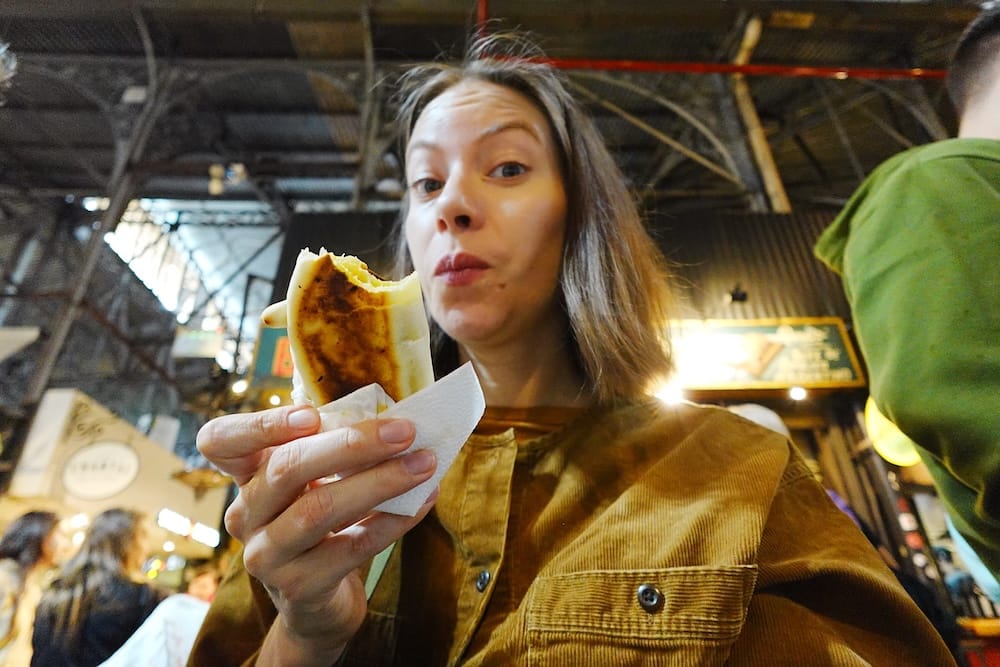
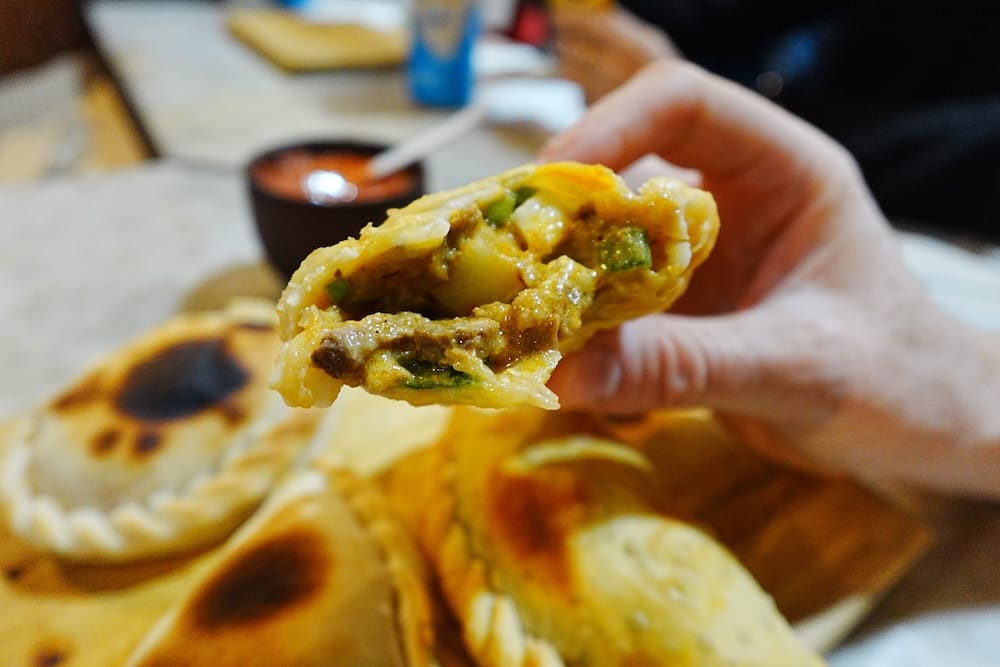
We ordered three different types of empanadas to sample: empanadas salteñas al cuchillo, a recipe from northern Argentina, where the meat is cut by knife rather than using ground beef; humita, stuffed with corn and cheese and slightly sweet in flavour; and jamón y queso with ham and cheese.
The beef empanadas were particularly juicy, and we also enjoyed the spicy sauce served alongside them.
The empanadas here are a bit steeper in price than what you’d pay elsewhere in the city, but keep in mind this is a popular tourist market. Still worth it, in my opinion!
Bar Seddon
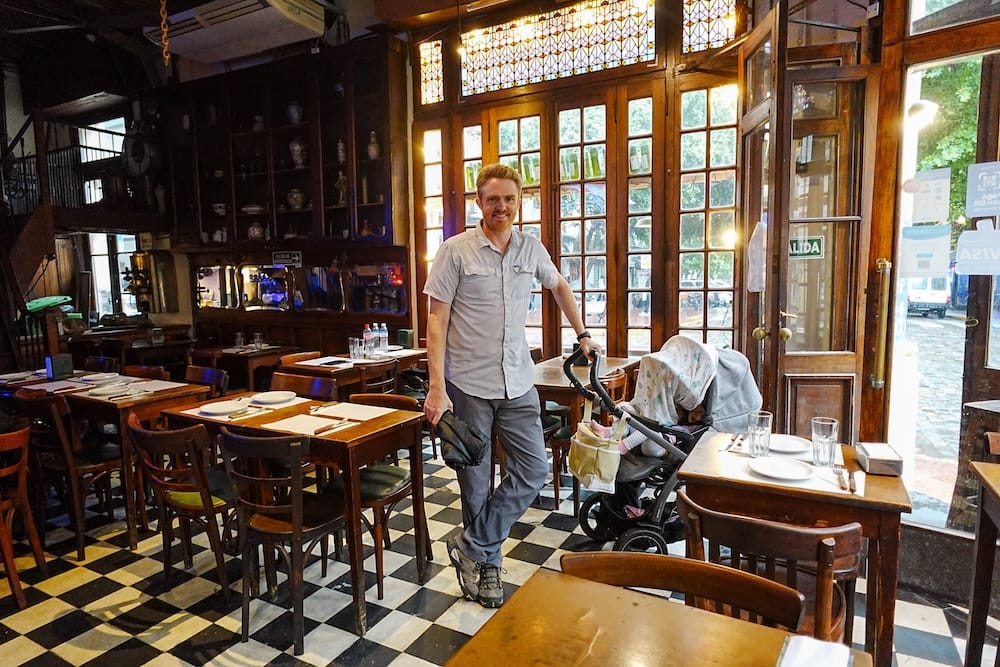
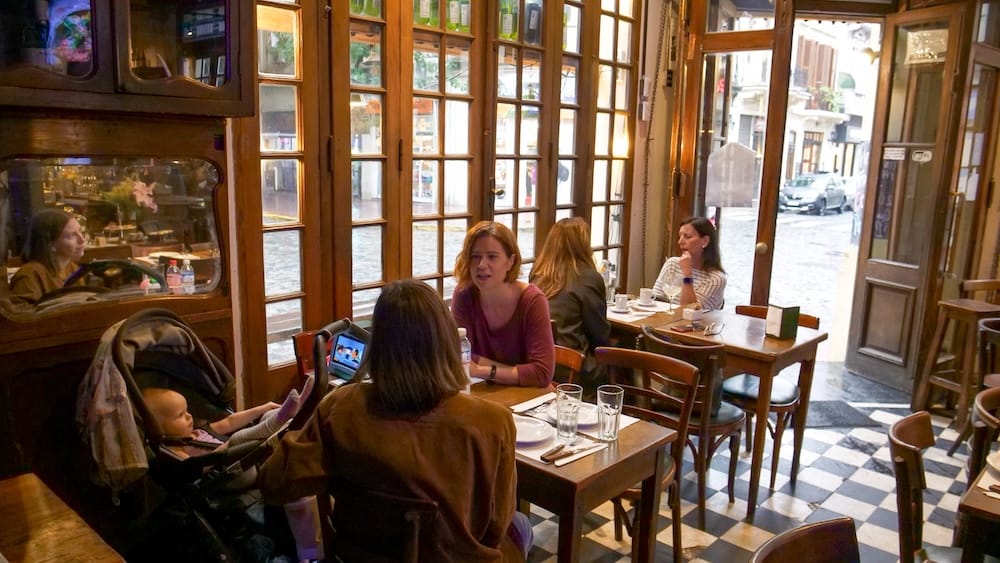
Another historic bar we visited was Bar Seddón, where we stopped for a late lunch with a friend who was in town. Like Bar El Federal, Bar Seddón is also recognized as one of Buenos Aires’s bares notables, and the interior has loads of character.
There are high ceilings, stained-glass windows and antiques decorating the space, all giving it that old-fashioned atmosphere I enjoy so much.
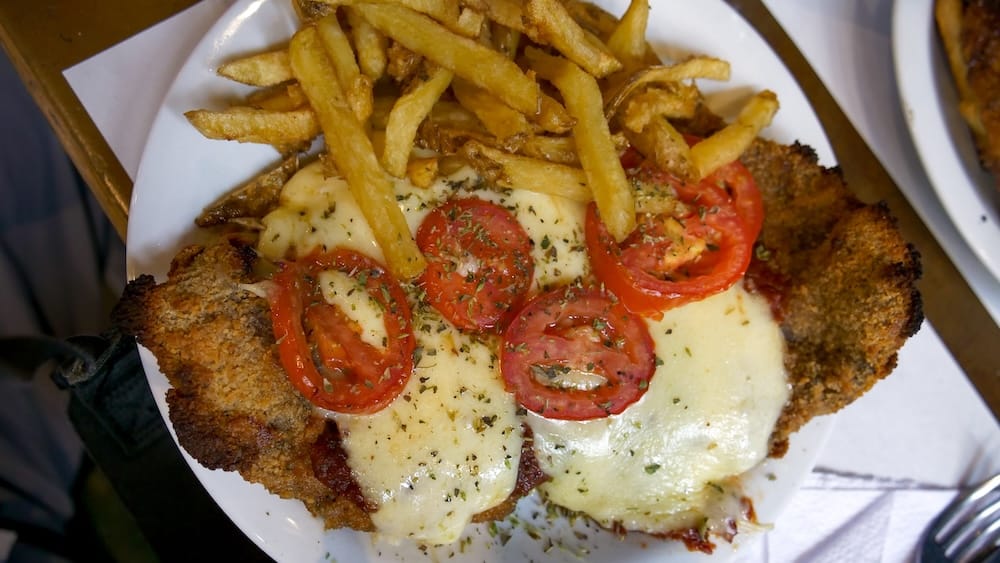
For lunch, our group ordered a few dishes to share, including a salmon salad, a Spanish tortilla and a generous milanesa napolitana served with fries. If you’re unfamiliar with milanesa napolitana, it’s an Argentine favourite made with a breaded cutlet topped with ingredients such as ham, tomato sauce and melted cheese. It’s a substantial dish, especially when accompanied by a plate of fries!
By the time we’d divided everything up, our lunch had turned into a little improvised buffet, with everyone getting to sample several different dishes.
And after such a good meal, we could not resist dessert, and our whole table got their own individual portion of flan with a heavy dollop of dulce de leche on the side. It was a feast of a meal!
Wine Window
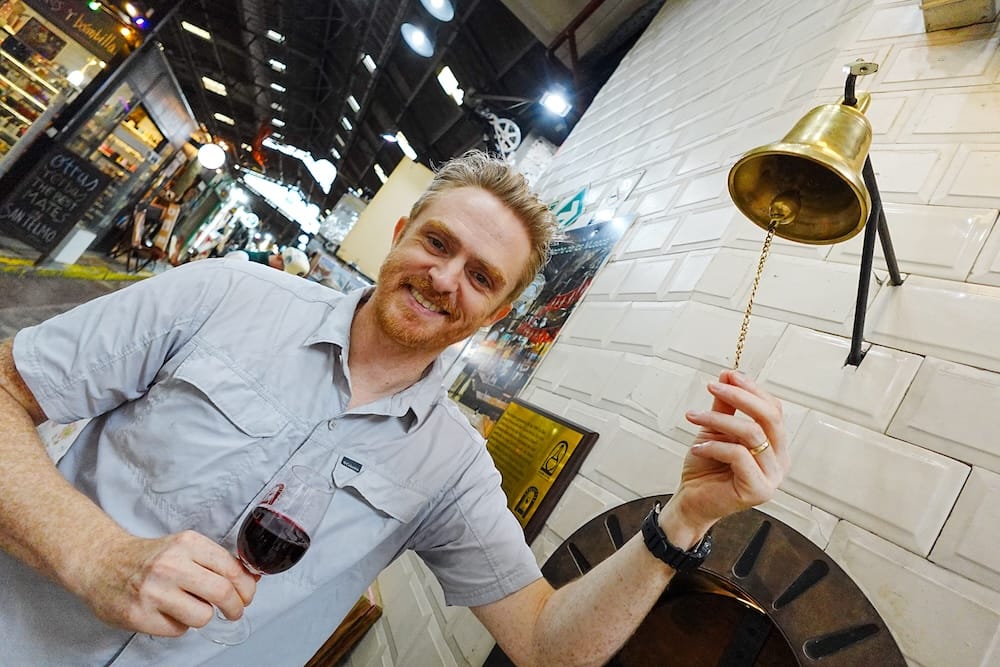
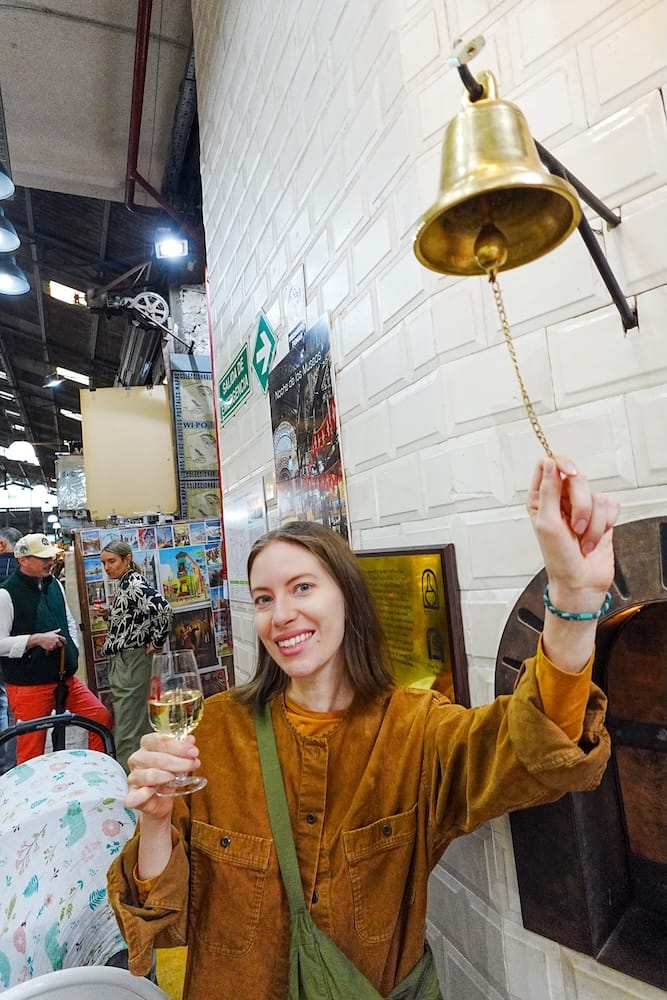
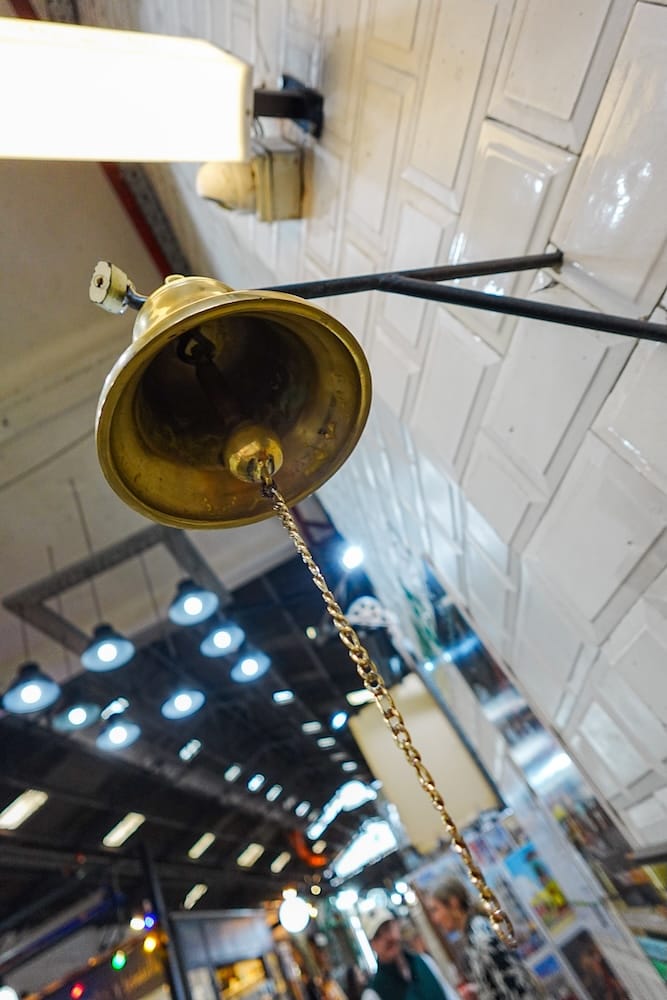
One of our more spontaneous discoveries happened when we were leaving Mercado de San Telmo. We spotted a little wine window and couldn’t resist stopping to see how it worked.
The concept was simple: pay for a glass of wine, ring the bell and wait for a small window to open so your drink could be served through it.
There were different wine options, including red or white and dry or sweet, and the whole interaction was a fun little addition to our market visit.
I went for a sweet white wine, the perfect dessert, if you will, to end our visit to the market.
Desnivel
I have fond memories of Desnivel because it was the first steakhouse I went to when I revisited Argentina as a young adult for the first time. It was just a few blocks from my hostel, and my friend and I walked over and had one of the best steaks of our lives.
Desnivel is a no-frills parrilla; you go there for big portions and meat cooked to perfection. We got a side of Provencal fries and loaded our bife de chorizo with chimichurri.
The place has levelled up since that first meal I had there; now they have tablecloths, a bigger menu and their space has expanded. That being said, it’s still a bustling joint loved by locals and tourists alike.
Should you stay in San Telmo?
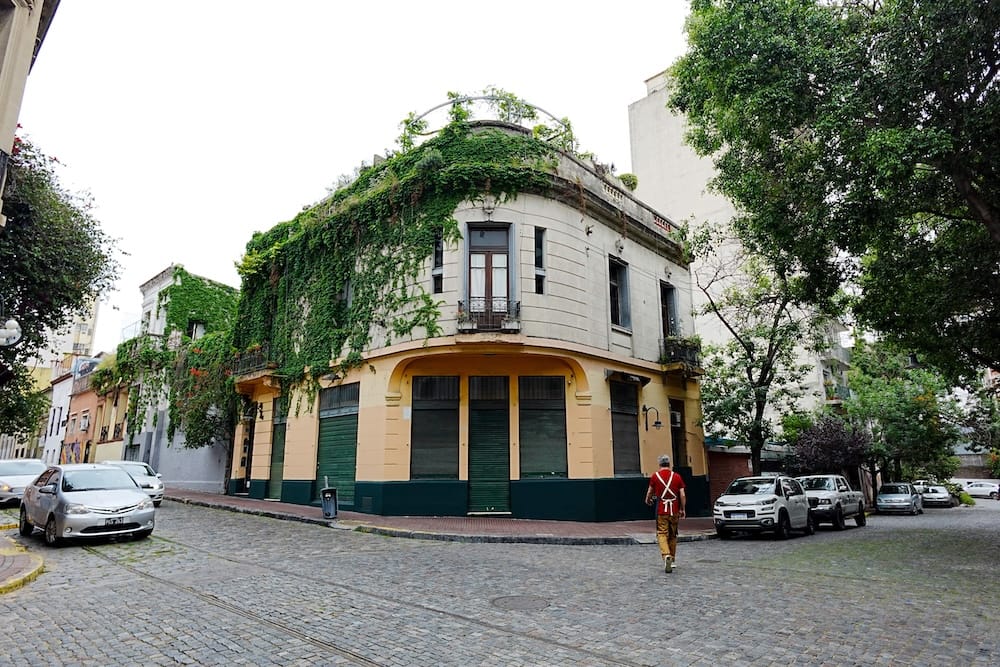
I think San Telmo is an appealing neighbourhood to stay in, particularly if you are a first-time visitor. You have historic surroundings, plenty of bars and restaurants, and so many attractions within walking distance. I also like that this barrio has a lively, youthful atmosphere.
That said, it’s not for everyone. Some streets can be quiet at night, and others get very busy on weekends, especially around Plaza Dorrego. If you’re sensitive to noise or prefer a more modern, orderly feel, you may want to consider quieter side streets or nearby areas instead.
Where to Stay in San Telmo
L’Adresse Hôtel Boutique is set in a historic building that dates back to 1889. This was once a mansion, turned conventillo, now turned hotel. It was lovingly restored by a French couple, who added a bit of Parisian flair. It’s just one block west of Parque Lezama so it’s a bit quieter than the heart of San Telmo.
Anselmo Buenos Aires, Curio Collection by Hilton is located right on Plaza Dorrego in the northwest corner, so it’s as central as you can get! Its interior is very modern and sleek, so it’s quite the contrast with the cobbled streets and historic buildings just outside.
Is San Telmo worth visiting?
Absolutely. I think San Telmo deserves a full day on a Buenos Aires itinerary, especially if you’re the kind of traveller who enjoys wandering through older neighbourhoods, browsing antiques, and appreciating historic buildings.
I’ve experienced San Telmo in very different ways over the years, from taking a bicycle tour as a young backpacker to returning with Samuel and our daughter to explore its historic attractions and food scene. Each visit has offered something different, and I still feel there’s plenty to discover.
If I were returning for just one day, I’d prioritize breakfast or coffee at a historic bar like El Federal and make time for El Zanjón. That guided tour was one of my favourite experiences because it revealed so much of the city’s history hidden beneath the streets.
And if I could arrange my visit for a sunny Sunday, I’d happily spend another afternoon wandering through the Feria, admiring the antiques, leather goods and hand-painted fileteado signs.
My main advice is to give San Telmo enough time to enjoy it without feeling rushed. Plan around the attractions that matter most to you, but then leave some room for wandering.
Visiting San Telmo with children
This is one of the practical things I would emphasize after exploring San Telmo with our daughter. The neighbourhood is compact, but that doesn’t necessarily make every street or attraction easy to navigate. Some sidewalks are narrow, the cobbled roads can be uneven, and several older buildings have stairs or layouts that weren’t designed with modern accessibility in mind.
Our daughter bounced around a bit as we pushed the stroller over the rougher surfaces, and I was very glad we had a big-wheeled, all-terrain model. It handled the conditions much better than I would have expected from a lightweight stroller with small wheels.
The historic mansions posed another challenge. Some of the commercial galleries have interior staircases, and Samuel and I occasionally took turns exploring different levels. While I browsed upstairs, Samuel would stay downstairs with our daughter, and then we could switch.
We also had to carry the stroller up some steps, which made certain parts of the outing less straightforward than the short distances between attractions might suggest.
We managed the outing with our baby, but having the right equipment and being willing to take turns when necessary certainly helped.
Explore More Buenos Aires Neighbourhoods
One of my favourite things about Buenos Aires is how different each neighbourhood feels. If you’ve enjoyed exploring San Telmo’s cobblestone streets and historic buildings, there are plenty of other barrios worth discovering, whether you’re planning another day of sightseeing or deciding where to stay.
Monserrat – Just north of San Telmo, this is the historic heart of Buenos Aires, home to Plaza de Mayo, Casa Rosada and Palacio Barolo. A great choice if you enjoy architecture and Argentine history.
Puerto Madero – For a complete change of scenery, explore the modern waterfront, riverside promenades and green spaces of Puerto Madero. We stayed here with our daughter when she was one year old, and we found it to be a super family-friendly neighbourhood.
Recoleta – Elegant avenues, historic mansions, leafy plazas and fascinating museums make Recoleta another wonderful area to explore, particularly if you enjoy architecture and art.
E-SIMS – I use Saily when I travel. This is a must to stay connected and not incur crazy roaming charges.
TOURS – My two go-tos for booking tours and activities are Viator and GetYourGuide.
HOTELS – I like Booking.com because they have the most variety of properties to suit all budgets and travel styles.
TRAVEL INSURANCE – Don’t leave on your trip without booking travel insurance. You can get a quote on SafetyWing.
CAR RENTAL – The best way to explore Argentina beyond the cities is to rent a car. I use Discover Cars because they have rentals across the country.